Gemstones and Materials
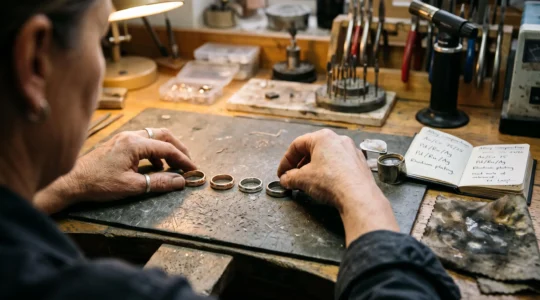
Why Do Two “Same Karat” Gold Rings Feel Different on Skin and Wear Differently?
Two gold rings marked 18K can contain exactly the same proportion of gold yet behave differently on the finger. One may look pinker, another whiter; one may develop scratches more visibly, while another may leave a dark mark on the…
Lire la suite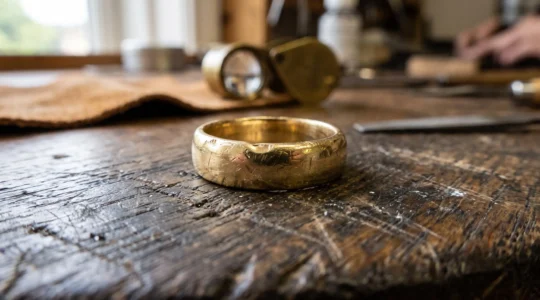
Why Does Pure Gold Bend So Easily in Rings Worn Every Day?
Pure gold bends easily because its natural softness and malleability allow it to change shape under pressure. In a ring worn every day, that means ordinary contact with desks, door handles, tools and other hard surfaces can leave dents, flatten…
Lire la suite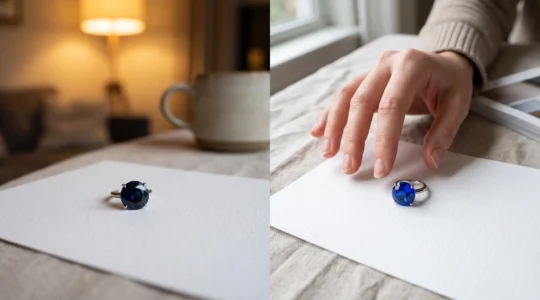
Why Does “High Saturation” Sometimes Look Fake Once You Wear the Stone Outside?
A sapphire that looks electric blue in an online listing can appear nearly black in a restaurant, strangely intense in direct sunshine, or unexpectedly dull against your favourite clothes. That change does not automatically mean the gemstone is artificial, treated…
Lire la suite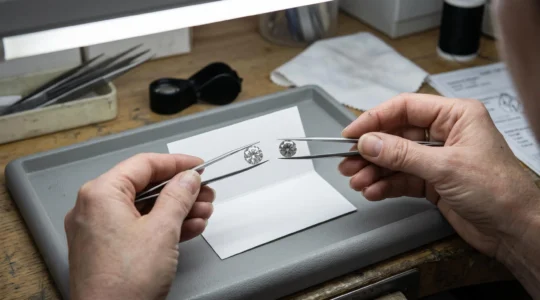
Why Does Cut Precision Change Sparkle Even When Two Stones Have the Same Size?
Two diamonds can have the same carat weight, colour and clarity yet look noticeably different because cut precision determines how effectively their facets direct light back toward the observer. Size describes mass, not optical performance. What matters visually is the…
Lire la suite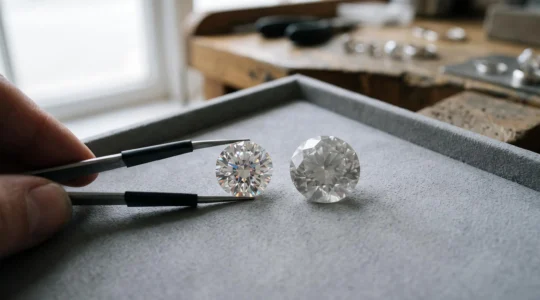
Why Do Two Diamonds With Similar Specs Look Totally Different From 30 cm Away?
Two diamonds can have nearly identical carat weights, colour grades and clarity grades yet look strikingly different when viewed from 30 cm away. One may produce crisp flashes and a lively pattern of bright and dark facets. The other may…
Lire la suite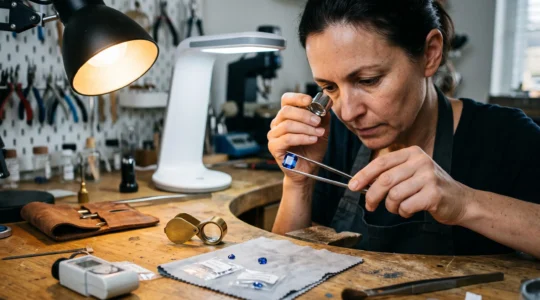
How Do Raw Geological Conditions Predict How a Gem Will Perform in Jewellery?
A gemstone’s geological history influences far more than its colour. The conditions under which its crystals formed help determine their chemical composition, internal structure, natural inclusions and optical behaviour. These characteristics influence whether a finished gem resists scratches, survives accidental…
Lire la suite