Blog
Fine jewelry occupies a unique place in human culture. It marks engagements, celebrates milestones, carries family stories across generations, and, for many people, serves as a wearable form of art. Yet for anyone new to the subject, the world of jewelry can feel overwhelming: karats and carats, vermeil and solitaires, lab-grown diamonds and natural ones, hallmarks and appraisals. This pillar page brings those ideas together in one place, explaining what fine jewelry actually is, how it is made, what determines its value, and how to choose and care for it with confidence.
Whether you are considering a first meaningful purchase, researching a family heirloom, or simply curious about how a piece of jewelry goes from raw material to finished treasure, the sections below cover the fundamentals in plain, practical terms.
What Exactly Is Fine Jewelry?
The term « fine jewelry » distinguishes pieces made from durable precious metals and genuine gemstones from « fashion » or « costume » jewelry, which uses base metals, plated finishes, and simulated stones. The distinction matters for three practical reasons: longevity, value, and repairability.
A fine jewelry piece is built to last decades or centuries. Its metal can be polished, resized, and reworked by a jeweler, and its stones can be reset into new designs. Fashion jewelry, by contrast, is generally not designed to be serviced — once the plating wears through or a glued stone falls out, the piece is usually not worth restoring.
The Defining Characteristics
- Precious metals: gold in various purities, platinum, and sterling silver form the structural base of fine jewelry.
- Genuine gemstones: diamonds, sapphires, rubies, emeralds, pearls, and many others, whether mined or created in a laboratory.
- Lasting construction: stones are set mechanically in metal, not glued, and joints are soldered rather than simply cast.
- Serviceability: a qualified jeweler can resize, re-tip, re-polish, and repair the piece over its lifetime.
Understanding the Metals
Metal choice shapes a piece’s appearance, weight, price, and day-to-day durability. Three metals dominate fine jewelry, each with distinct strengths.
Gold
Pure gold is soft, so it is alloyed with other metals for strength. Purity is measured in karats: 24k is pure gold, 18k contains 75% gold, and 14k contains about 58%. Higher karat gold has a richer color but scratches more easily; 14k and 18k are the most common choices for jewelry worn daily. Gold also comes in colors — yellow, white, and rose — depending on which alloying metals are used. Note that white gold is typically plated with rhodium to achieve its bright finish, and that plating wears off over time and can be reapplied.
Platinum
Platinum is denser and more durable than gold, making it the traditional choice for engagement rings and heirloom pieces. It develops a soft gray patina rather than losing metal when scratched — a jeweler can re-polish it, but many owners grow fond of the patina. Platinum jewelry is usually 95% pure, which also makes it a good option for people with metal sensitivities.
Sterling Silver
Sterling silver is 92.5% pure silver combined with other metals for hardness. It offers the look of white precious metal at a more accessible price, but it tarnishes with exposure to air and requires regular polishing. « Vermeil » refers to sterling silver plated with a thick layer of gold — a middle ground between silver and solid gold.
Understanding Gemstones
Gemstones are typically divided into diamonds and colored stones, and each category is evaluated differently. A little knowledge here goes a long way toward making informed choices.
How Diamonds Are Evaluated
Diamonds are graded using a framework of four characteristics, commonly called the four Cs:
- Cut: how well the stone’s facets are shaped and aligned. Cut has the greatest influence on how much a diamond sparkles.
- Color: graded on a scale from colorless to light yellow or brown. The less color, the higher the grade.
- Clarity: the presence or absence of internal features (inclusions) and surface marks (blemishes), viewed under magnification.
- Carat weight: a measure of weight, not size — one carat equals 0.2 grams.
Independent grading reports from reputable laboratories provide an objective description of a diamond’s characteristics, which helps buyers compare stones fairly.
Natural Versus Lab-Grown Diamonds
Lab-grown diamonds are chemically and optically identical to mined diamonds; they are real diamonds, produced above ground rather than extracted. They generally cost less and have become widely available in recent years. The main practical considerations are resale value, which tends to be lower, and personal preference regarding origin. Neither choice is objectively better — it depends on what matters most to the buyer.
Colored Gemstones
Unlike diamonds, colored stones such as sapphires, rubies, and emeralds are judged more holistically: color saturation and uniformity matter more than a standardized grade scale. Some treatment is common and accepted in the trade — heat treatment to improve color, for example — while other treatments, like fracture-filling in emeralds, affect durability and should be disclosed. Always ask whether a stone has been treated and expect an honest answer from a reputable seller.
How a Piece of Jewelry Is Made
Understanding the making process helps explain why two visually similar rings can differ so much in price and quality. While techniques vary, most fine jewelry follows a similar path.
- Design: the piece is sketched or modeled digitally, specifying dimensions, metal, and stone placement.
- Model making: a wax model or 3D print of the piece is produced to check proportions and fit.
- casting or fabrication: molten metal is poured into a mold of the model, or the piece is shaped by hand from sheet and wire.
- Stone setting: a setter cuts seats into the metal and secures each stone using prongs, bezels, pavé, or channel settings.
- Finishing: the piece is filed, polished, and inspected. Hallmarks and maker’s marks are applied where required.
- Quality control: a final check confirms stones are secure, seams are clean, and the piece matches the design.
Stone setting deserves special attention because it is where quality is most visible — or most hidden. A well-set stone sits level in its mounting, with prongs of even thickness touching the stone firmly. A poorly set stone may sit crooked, have unequal prongs, or catch on fabric, and it is far more likely to loosen over time.
Common Setting Styles
- Prong setting: small metal claws hold the stone, maximizing light exposure and sparkle.
- Bezel setting: a rim of metal encircles the stone fully or partially, offering excellent protection.
- Pavé setting: many small stones are set closely together along the surface for a continuous sparkle.
- Channel setting: stones are set in a groove between two metal walls, common in bands.
How Jewelry Is Valued and Priced
Jewelry pricing combines material cost, labor, design, and market factors. Several elements work together:
- Metal weight and purity: heavier pieces and higher karat gold contain more intrinsic metal value.
- Stone quality: a well-cut diamond or a vivid sapphire commands a significant premium over a mediocre one of the same size.
- Craftsmanship: hand-finished details, intricate settings, and brand reputation all add to the final price.
- Market conditions: gold, platinum, and diamond prices fluctuate, which affects both new and resale values.
It is worth understanding the difference between retail value and intrinsic value. A new piece sold at retail includes design, labor, and business overhead. If you ever resell it, you will typically receive closer to the metal and stone content value. This is normal across the industry and is not a sign of overpaying — it simply reflects what you are paying for: craftsmanship and a finished piece, not just raw materials.
Buying Jewelry With Confidence
A first significant jewelry purchase feels high-stakes, but a few habits dramatically reduce the risk of disappointment.
- Buy from established sellers with clear return policies, written disclosures, and verifiable reviews.
- Ask for documentation: grading reports for diamonds, treatment disclosures for colored stones, and hallmarks or stamps indicating metal purity.
- Compare before committing: look at similar pieces from two or three sellers to calibrate your sense of price and quality.
- Verify the fit and comfort: a ring that fits perfectly will be worn far more than one that needs constant adjustment.
- Get an independent appraisal for insurance purposes once you own the piece.
Spotting Red Flags
- Prices that seem dramatically below market value for the claimed materials.
- Vague answers about whether stones are natural, lab-grown, or simulated.
- No written receipt specifying metal purity and stone details.
- Refusal to allow third-party verification or appraisal.
Caring for Your Jewelry
Fine jewelry is durable, but not indestructible. A small amount of routine care keeps pieces looking their best for decades.
- Remove rings before gardening, gym workouts, swimming in chlorinated pools, or applying lotions.
- Clean gently at home: warm water, a drop of mild dish soap, and a soft toothbrush handle most everyday grime. Avoid ultrasonic cleaners for emeralds, pearls, and porous stones.
- Store pieces separately in soft pouches or a compartmentalized box so harder stones cannot scratch softer metals and gems.
- Schedule professional checkups: an annual visit to a jeweler to tighten prongs and re-polish can prevent lost stones.
Pearls deserve a special note: they are organic and softer than most gems, so they should be wiped with a soft cloth after wearing, kept away from perfumes and hairsprays, and strung on silk with knots between pearls to prevent loss if the strand breaks.
Frequently Asked Questions
Is 14k or 18k gold better?
Neither is objectively better. 18k has a richer color and higher gold content; 14k is harder and more resistant to everyday wear. For pieces worn constantly, many people prefer 14k; for special-occasion pieces, 18k is a popular choice.
Are lab-grown diamonds a good choice?
They are genuine diamonds at a lower price, making larger or higher-quality stones accessible. If resale value or natural origin matters to you, factor that into the decision. Quality and beauty are equivalent.
How can I tell if my jewelry is real?
Look for hallmarks such as « 14k, » « 585, » « 925, » or « PT950 » stamped inside rings or on clasps. For certainty, a jeweler can test the metal and stones in minutes, usually at little or no cost.
Fine jewelry rewards a little knowledge with a lifetime of enjoyment. By understanding metals, stones, craftsmanship, and care, any buyer — from first-time purchaser to seasoned collector — can choose pieces that are beautiful, durable, and genuinely worth their price.
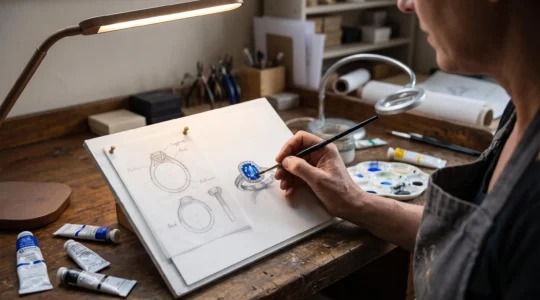
Why Can a Gouache Rendering Look Perfect but the Finished Jewellery Still Surprise You?
A hand-painted sapphire glows against polished gold. Every diamond seems perfectly positioned, the proportions look balanced, and the entire ring appears ready to wear. Yet when the finished piece arrives, the centre stone looks darker, the setting stands higher than…
Lire la suite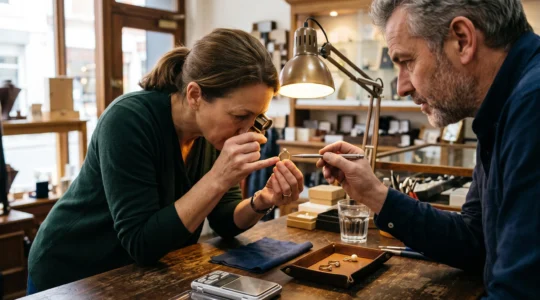
Why Do Some Sellers Say “Precious Metal” Instead of Naming the Alloy, and What Should You Do?
“Precious metal” sounds reassuring on a jewellery listing. It suggests inherent value, durability and perhaps gold or silver. Yet the expression alone tells a buyer remarkably little about what a ring, bracelet or necklace actually contains. A product described as…
Lire la suite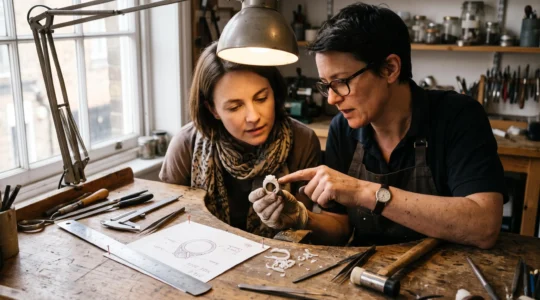
Why Do Bespoke Jewellery Concepts Fall Apart Before the First Prototype Is Even Made?
A bespoke jewellery concept can look perfect on a screen and still be difficult to manufacture, uncomfortable to wear or unexpectedly expensive. The problem is rarely the idea itself. It is the gap between what an image communicates and what…
Lire la suite