Gemstones and Materials
Every piece of jewelry begins with a choice of materials. Whether you are shopping for an engagement ring, a birthday gift, or a piece to mark a personal milestone, understanding gemstones and materials helps you judge value, set realistic expectations, and care for your jewelry properly. This pillar page brings together the essential knowledge: how gems are classified, how the four Cs work, which metals are used in jewelry, and how treatments and lab-grown stones fit into the picture.
Precious vs. Semi-Precious Gemstones
Traditionally, the jewelry world divided gemstones into two groups: precious stones — diamonds, rubies, sapphires, and emeralds — and everything else, labeled semi-precious. The distinction dates back centuries, when these four stones were simply the rarest and most sought after in European markets.
Today, professionals use this classification far less. A flawless topaz can be less valuable than a mediocre ruby, and fine specimens of so-called semi-precious stones — like tsavorite garnet or Paraiba tourmaline — can command extraordinary prices. What matters is the quality of the individual stone, not the category it belongs to.
Common Gemstones You Will Encounter
- Diamond: prized for unmatched hardness and brilliance; the traditional choice for engagement rings.
- Sapphire: most famous in blue, but available in nearly every color except red.
- Ruby: the red variety of the mineral corundum; the most valuable rubies come from Myanmar.
- Emerald: a green beryl, almost always included — visible inclusions called the « jardin, » or garden, are expected.
- Aquamarine, topaz, amethyst, citrine: affordable, colorful stones popular in everyday jewelry.
- Pearl and opal: organic and hydrated materials that require gentler care than crystalline gems.
The Four Cs: How Gemstone Quality Is Judged
For diamonds, and by extension many colored stones, quality is assessed through four criteria known as the four Cs. Understanding them gives you a shared vocabulary with jewelers and appraisers.
- Cut: how well the stone’s facets are shaped and aligned. Cut has the greatest influence on a diamond’s sparkle; a well-cut stone returns light to the eye, while a poorly cut one looks dull regardless of color.
- Color: for diamonds, the absence of color is graded on a scale from D (colorless) to Z (light yellow). For colored stones like sapphires, the most desirable hue is often the most saturated and even one.
- Clarity: the presence or absence of internal inclusions and surface blemishes. Most inclusions are invisible to the naked eye and only matter when they affect durability or appearance.
- Carat: a unit of weight, not size — one carat equals 0.2 grams. Because larger rough crystals are rarer, price rises exponentially, not linearly, with weight.
A useful way to think about the four Cs: they are a description, not a verdict. A slightly included, warmly colored diamond cut for maximum sparkle can be more beautiful to wear than a flawless stone optimized purely for a certificate.
Metal Choices in Jewelry
The metal holding the stone is just as important as the stone itself. It determines the color of the piece, its durability, its weight, and, to a large extent, its price.
Precious Metals Compared
- Gold: measured in karats — 24k is pure gold, while 18k (75% gold) and 14k (58% gold) are the most common in fine jewelry because pure gold is too soft for daily wear. Yellow, white, and rose gold differ only in the alloy metals mixed in.
- Platinum: denser and more durable than gold, naturally white, and hypoallergenic. It develops a soft gray patina over time that many owners appreciate; it can be repolished at any time.
- Silver (sterling): 92.5% pure silver. Affordable and attractive, but it tarnishes and scratches more easily, making it better suited to occasional-wear pieces.
- Alternative metals: titanium, tungsten carbide, and palladium appear mostly in men’s bands; they are extremely hard but cannot be easily resized.
A practical example: if you are choosing between an 18k white gold and a platinum setting for an engagement ring, both look similar when new. Platinum is heavier, usually more expensive, and holds prongs extremely well; white gold is lighter and cheaper but is rhodium-plated, and the plating may need renewing every few years.
Treated, Synthetic, and Simulated Stones
Not every gem reaching the market is exactly as it came out of the ground, and that is not inherently a problem — as long as it is disclosed honestly.
Treatments
Treatments improve a stone’s color or clarity. Some are ancient and stable, others are more recent and can alter over time:
- Heat treatment: standard for sapphires and rubies; the effect is permanent and generally accepted in the trade.
- Oiling: nearly all emeralds are oiled to reduce the visibility of fissures; this requires periodic re-treatment and gentler cleaning.
- Irradiation and coating: used on some blue topaz and colored diamonds; stability varies, so ask about care requirements.
Lab-Grown and Simulated Stones
Lab-grown diamonds are chemically and optically identical to mined diamonds — they are real diamonds, produced above ground rather than below it. They typically cost less and allow buyers to prioritize size and quality within a budget. Simulants, by contrast, only look similar: cubic zirconia and moissanite are different substances with different hardness and optical behavior.
When buying, a simple question protects you: « Is this natural, lab-grown, or a simulant, and has it been treated? » A reputable seller will answer clearly and, for significant purchases, provide a certificate from an independent laboratory such as GIA, IGI, or a recognized gemological institute.
Durability: Matching the Material to the Wearing Habits
Gemstone hardness is measured on the Mohs scale, which runs from 1 (talc) to 10 (diamond). Hardness describes scratch resistance, not toughness — a diamond can chip if struck sharply, despite being the hardest natural material.
- Everyday rings (worn daily): favor diamonds, sapphires, and rubies (Mohs 9 or above) set in platinum or 14k–18k gold.
- Occasional pieces: emeralds, opals, pearls, and tanzanite are softer or more fragile and better suited to earrings, pendants, or rings worn with care.
- Children’s and activity jewelry: avoid brittle stones entirely; polished metal or hard, inexpensive stones are safer choices.
Imagine someone who works with their hands — a nurse, a carpenter, a rock climber. A prong-set emerald ring in that context is a constant worry. The same person might wear a bezel-set sapphire for decades without incident. Matching the material to real life is often the single most valuable decision in a purchase.
Caring for Gemstones and Metals
Good habits extend the life of any piece of jewelry, whatever its materials:
- Remove rings before swimming, cleaning with chemicals, gardening, or applying lotions.
- Clean most hard gems with warm water, mild dish soap, and a soft brush; avoid ultrasonic cleaners for emeralds, opals, pearls, and fracture-filled stones.
- Store pieces separately — a diamond can scratch every other gem it touches, including other diamonds.
- Have prongs, clasps, and settings inspected by a jeweler regularly, especially on pieces worn daily.
- Keep pearls strung on silk and knotted between each pearl to protect them from abrasion.
Making an Informed Choice
Gemstones and materials are not a topic to master overnight, but a few principles carry most of the weight. Prioritize cut and overall beauty over certificate perfection. Match hardness to how the piece will actually be worn. Ask about treatments and origin, and get important purchases documented. Finally, buy from sellers who answer questions patiently and put disclosures in writing — transparency is the best indicator of quality in the jewelry trade, just as it is in the stones themselves.
Browse the related pages in this category for detailed profiles of individual gemstones, metal comparisons, and care instructions tailored to each material.
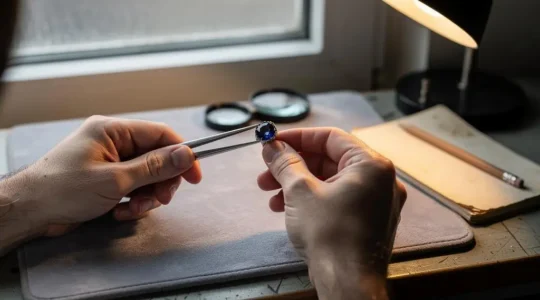
Why Do Some Sapphires and Rubies Look “Inky” Indoors but Great in Sunlight?
A sapphire or ruby that looks spectacular in direct sunlight but nearly black under ordinary indoor lighting is not necessarily defective. The difference often comes from the interaction between **colour saturation, tone, transparency, cutting proportions and available light**. A deeply…
Lire la suite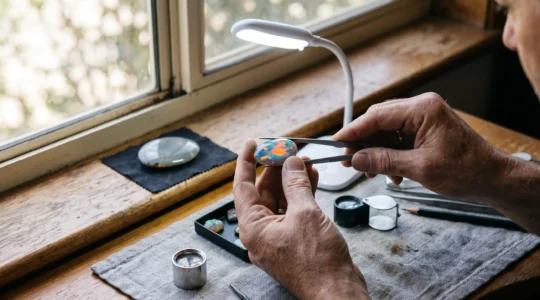
Why Do Iridescent Opals Lose Their “Fire” in Some Rooms but Explode in Others?
An opal that flashes brilliant green, orange and red in a jewellery shop can look almost grey under the lights at home. That contrast is unsettling, especially when the stone was expensive. Yet a change in appearance does not necessarily…
Lire la suite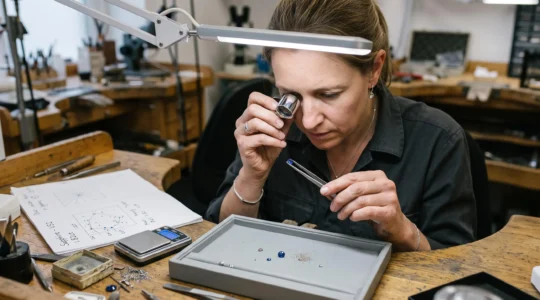
Why Does “Eye-Clean” Clarity Matter for Some Gems but Barely Show on Others?
Two gemstones can have noticeably different clarity characteristics under magnification yet look almost identical when worn. Another pair may receive similar clarity descriptions, although one contains an internal feature that makes it considerably more vulnerable to damage. This is why…
Lire la suite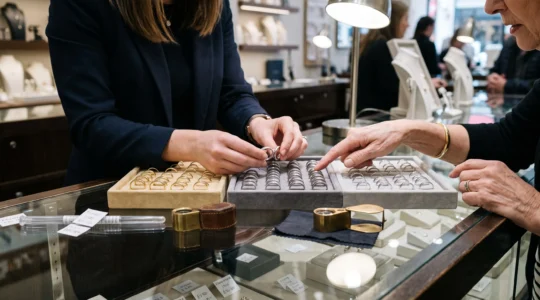
Why Does “Precious Metal” Mean Different Things in 3 Price Tiers at the Same Jewellery Counter?
Three rings sit on the same jewellery counter. One is sterling silver with a modest price tag. Another is gold, considerably more expensive. The third is platinum, presented as a premium choice. All three are described as precious metals, yet…
Lire la suite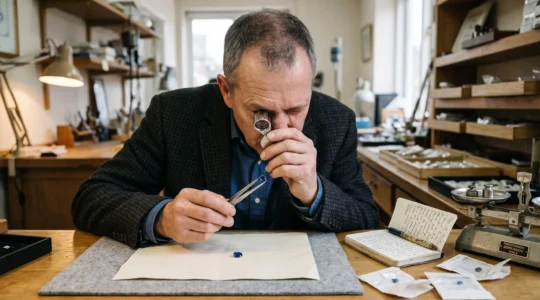
What Makes a Gem “Exotic,” and When Is It Just a Marketing Word With a Higher Price Tag?
A gemstone described as « exotic » may be genuinely unusual, visually distinctive, or difficult to source. It may also be an ordinary example of a less familiar mineral being sold with an extraordinary story. The word itself does not establish rarity,…
Lire la suite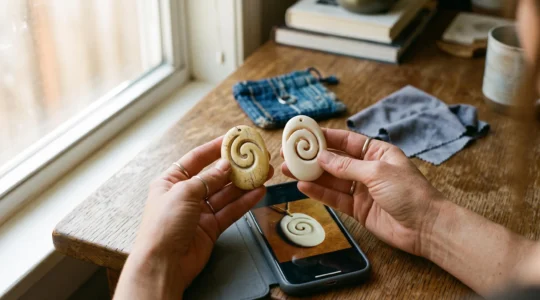
Why Do Organic Jewellery Materials Warp, Crack, or Yellow Within 90 Days?
A pearl necklace that loses its lustre, a horn pendant that changes colour, or a carved bone ornament developing fine cracks can be alarming, especially when the jewellery is relatively new. Yet natural materials do not respond to everyday conditions…
Lire la suite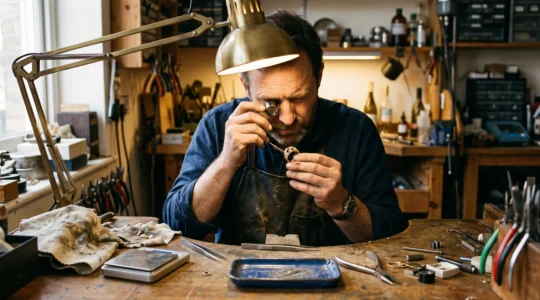
What Is Native Gold, and How Does It Change the Look and Wear of a Ring Over Time?
Native gold is gold that occurs naturally as a mineral, rather than a standardised jewellery alloy manufactured to a controlled composition. It can contain silver and other elements, which influence its colour and physical properties. However, a ring described as…
Lire la suite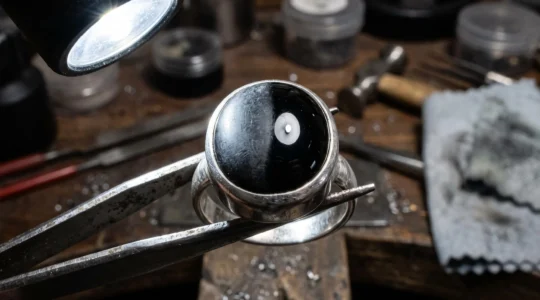
Why Does Dark Onyx Start Looking Cloudy After 6 Weeks in a Daily-Wear Ring?
A black onyx ring can start looking grey or cloudy after six weeks of daily wear because its polished surface may develop fine scratches that scatter light. Residue from soap, cosmetics or skin oils can produce a similar appearance. Neither…
Lire la suite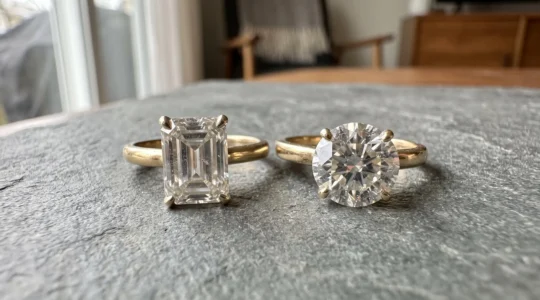
Why Do Baguette and Emerald Cuts Show Every Speck of Dust After 2 Hours of Wear?
An emerald-cut diamond can look immaculate when you leave home and surprisingly cloudy by lunchtime. A baguette side stone may seem to display every fingerprint, while a round brilliant ring worn through the same morning still looks lively. The difference…
Lire la suite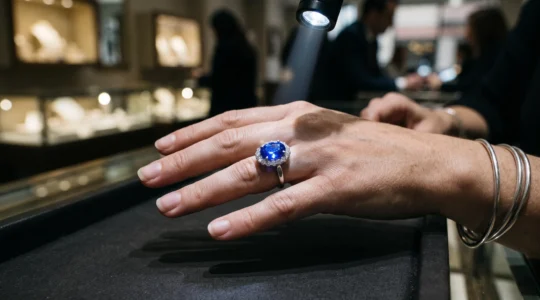
Why Do Some Gemstones Look Electric in Store but Dull in Office Lighting 2 Weeks Later?
A coloured gemstone can look electric blue beneath a jewellery counter spotlight and almost grey under an office LED without undergoing any physical change. The difference often comes from the light reaching the stone, the way its facets return that…
Lire la suite