Styles and Influences
Jewelry has always been more than decoration. Every ring, necklace, and pair of earrings carries traces of the era, culture, and artistic movement that shaped it. Understanding jewelry styles and influences helps you make sense of what you see in shop windows, auction listings, and family collections, whether you are buying your first significant piece or simply trying to identify a vintage brooch inherited from a relative.
This category breaks down the major stylistic movements in jewelry, explains where their signature looks come from, and shows you how to recognize them with confidence.
What Do We Mean by Jewelry Styles and Influences?
A jewelry style is a recognizable set of design characteristics: typical shapes, materials, motifs, and construction techniques. An influence is the broader force behind those characteristics, such as an artistic movement, a historical event, technological innovation, or cultural exchange.
Think of it like architecture. A Gothic cathedral and a mid-century modern house both provide shelter, but their proportions, materials, and details tell completely different stories. Jewelry works the same way: a geometric platinum bracelet from the Art Deco period and a flowing organic gold necklace from the Art Nouveau era serve similar purposes, yet everything about them speaks of different worlds.
The Major Jewelry Styles You Should Know
Victorian Jewelry
Named after Queen Victoria, whose long reign shaped taste across the English-speaking world, Victorian jewelry is romantic, sentimental, and often symbolic. Common features include:
- Lockets, mourning jewelry, and hairwork pieces carrying personal reminders
- Serpent motifs symbolizing eternal love, popularized after Prince Albert gave Victoria a serpent engagement ring
- Warm yellow gold, garnets, seed pearls, and enamel
- Heavy, intricate craftsmanship reflecting hand-made production
Imagine a woman wearing a black enamel mourning ring holding a lock of hair: that is Victorian sentimentality expressed in metal and stone.
Art Nouveau Jewelry
Art Nouveau emerged as a reaction against industrial mass production. It celebrates nature, flowers, dragonflies, Peacock eyes, and flowing female silhouettes rendered in sinuous, whiplash lines. Designers like René Lalique elevated jewelry to fine art, favoring materials such as enamel, horn, moonstones, and opals over large precious stones. The emphasis is on artistry and atmosphere rather than intrinsic material value.
Art Deco Jewelry
In sharp contrast, Art Deco embraces geometry, symmetry, and modernity. Signature traits include:
- Clean geometric shapes: rectangles, trapezoids, fans, and stepped forms
- Platinum and white metals paired with diamonds, sapphires, emeralds, and rubies
- Strong color contrasts, often influenced by exposure to Asian and Egyptian design
- Precision engineering, calibre-cut stones, and baguette accents
An Art Deco cocktail ring looks like a tiny skyscraper on your hand, and that is exactly the spirit it was designed to capture.
Retro Jewelry
Retro pieces, produced during and around the wartime years, favor large scale, rose and yellow gold, and sculptural curves. Because platinum was needed for the war effort, designers worked creatively with gold, producing bold, three-dimensional pieces such as oversized clips and ribbon-style bracelets that felt optimistic despite difficult times.
Mid-Century and Modernist Jewelry
After the war, jewelry became more abstract and experimental. Modernist designers treated metal as sculpture, using textures, asymmetric compositions, and unusual stones. In the United States, studio jewelers and independent artisans gained recognition, blurring the line between jewelry and wearable art.
Contemporary and Minimalist Styles
Today’s jewelry landscape is wonderfully plural. Single trends coexist with revival movements, and a few contemporary directions dominate everyday wear:
- Minimalism: thin bands, tiny studs, and delicate chains designed for layering and daily wear
- Vintage-inspired design: modern pieces borrowing milgrain detailing, filigree, and halo settings from past eras
- Statement and maximalist styles: bold cuffs, chunky chains, and sculptural earrings
- Ethical and sustainable design: recycled metals and traceable stones influencing aesthetics toward simplicity and transparency
Cultural and Regional Influences
Styles do not develop in a vacuum. Some of the richest jewelry traditions come from specific cultures, and their influence shows up everywhere in mainstream design.
Indian jewelry is renowned for intricate gold work, Kundan and Polki diamond settings, and elaborate bridal sets. Japanese design often emphasizes restraint, refined metalwork, and nature motifs. Scandinavian jewelry brought clean, functional modernism to the mid-century world. Celtic traditions contributed knots, spirals, and Claddagh symbolism still popular across the English-speaking world, particularly in Ireland and among diaspora communities.
Colonial trade routes, world fairs, and archaeological discoveries also redirected taste. King Tutankhamun’s tomb exhibition, for example, flooded 1920s design with Egyptian motifs, scarabs, pyramids, and lotus flowers, which is why so many Art Deco pieces carry those elements.
A Quick Word on Revivals
A revival is a later style deliberately echoing an earlier one. Georgian revival, Victorian revival, and Egyptian revival pieces exist throughout the market. Revivals are not fakes; they are sincere reinterpretations. Distinguishing an original from a revival takes practice, and hallmarks, construction techniques, and stone cuts are the usual clues a jeweler will examine.
How to Identify a Jewelry Style: A Practical Process
Even beginners can narrow down a piece’s style by following a simple sequence:
- Examine the metal. Silver and yellow gold dominate earlier periods; platinum and white gold point toward the interwar decades and later.
- Look at the stone cuts. Old mine and old European cuts suggest antique pieces; brilliant and baguette cuts suggest the twentieth century onward.
- Note the motifs. Nature and flowing lines hint at Art Nouveau; geometry hints at Art Deco; bold gold curves suggest Retro.
- Check construction. Hand-cut details and uneven finishes often indicate age, while crisp machine precision suggests modern production.
- Search for hallmarks and maker’s marks. These tiny stamps can confirm metal purity, origin, and sometimes the designer, which anchors your identification.
If you are unsure, a reputable appraiser or an experienced jeweler can usually pinpoint a style and period within minutes.
Choosing a Style That Suits You
Knowing the styles matters most when you are deciding what to buy or wear. A few practical tips:
- Match the style to your lifestyle: delicate Edwardian-style filigree suits careful hands; sturdy contemporary pieces suit daily wear.
- Consider wardrobe compatibility. Geometric Art Deco pieces pair naturally with tailored, modern clothing, while Victorian styles complement softer, romantic looks.
- Buy the era, not the trend. A genuine appreciation for a style’s history keeps a piece meaningful long after fashion moves on.
- When collecting, prioritize condition, craftsmanship, and provenance over the mere label of a period.
Consider a fictional example: Sarah inherits a geometric, platinum-set diamond ring with calibre sapphires. Using the identification steps above, she recognizes the Art Deco hallmarks, learns about the interwar fascination with machine-age design, and now wears the piece with genuine understanding rather than guessing at its story.
Why Styles Keep Circulating
Jewelry fashion is cyclical.黄色gold returns after decades of white-metal preference, chunky chains resurface, and Victorian sentimentality finds new audiences. These resurgences are not accidents; they reflect broader cultural moods, from nostalgia to reactions against minimalism. Understanding the underlying influences means you can spot a revival early, appreciate what it borrows, and decide whether it genuinely fits your taste.
Key Takeaways
- Jewelry styles are recognizable combinations of materials, motifs, and techniques tied to specific eras and movements.
- Victorian, Art Nouveau, Art Deco, Retro, mid-century, and contemporary styles each carry distinctive signatures worth learning.
- Cultural traditions, historical events, and artistic movements constantly cross-pollinate jewelry design.
- A structured identification process, metal, cuts, motifs, construction, marks, makes styling and dating pieces accessible to anyone.
The articles in this category explore each of these styles and influences in depth, giving you the vocabulary and visual cues to appreciate, identify, and choose jewelry with confidence.
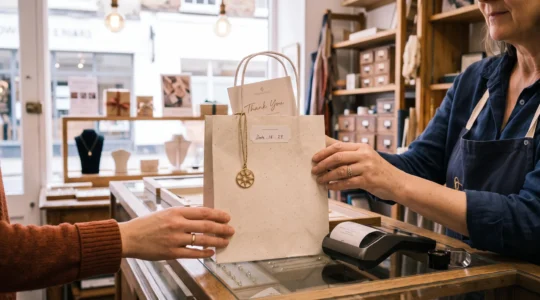
How Do You Choose a Cultural-Identity Jewellery Gift Without Getting It Wrong?
A cultural-identity jewellery gift can express belonging, family history and affection, but its meaning depends on more than an attractive design. A pendant associated with protection, a ring connected to Irish heritage or a motif inherited through generations may represent…
Lire la suite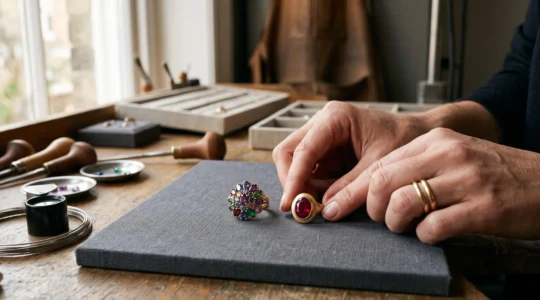
Why Do High-Contrast Jewellery Combinations Sometimes Look Chaotic Instead of Bold?
High-contrast jewellery looks chaotic when several elements compete for attention without a clear focal point. A vivid gemstone, a reflective metal, a second contrasting stone and a busy outfit can each demand to be noticed. The problem is not necessarily…
Lire la suite
Which Design Direction Fits You Better: Geometric Precision or Natural Motifs for Daily Wear?
The choice between geometric jewellery and natural motifs is less about following a trend than understanding how shapes interact with clothing, personal style and everyday routines. Geometric pieces use symmetry, straight lines, repeated patterns and defined angles to create a…
Lire la suite