Techniques and Craftsmanship
Behind every well-made ring, necklace, or pair of earrings lies a set of skills that has been refined over centuries. Jewelry techniques and craftsmanship refer to the methods artisans use to transform raw metals and gemstones into finished pieces—everything from shaping a band by hand to securing a fragile stone under a microscope. Understanding these techniques helps you appreciate why two seemingly similar pieces can differ dramatically in price, durability, and beauty. This pillar page walks you through the major techniques, how they connect to one another, and what to look for when judging the quality of a piece.
Why Craftsmanship Matters in Jewelry
Craftsmanship is the difference between a piece that lasts a lifetime and one that loosens, tarnishes, or breaks within a few years. A well-executed setting keeps a diamond secure through daily wear; a smooth, even polish resists dirt buildup; a properly soldered joint survives decades of use. For beginners, learning to recognize the signs of skilled work is one of the most practical skills you can develop—it protects your investment and deepens your enjoyment of the pieces you own.
The Main Jewelry-Making Techniques
Hand Fabrication
Hand fabrication is the oldest and arguably most respected approach: the artisan builds the piece directly from metal sheet, wire, and tubing, using saws, hammers, pliers, and files. Each component is shaped, joined, and refined by hand, which allows complete control over proportions and details.
- Best for: one-of-a-kind pieces, repairs, and custom commissions
- Strengths: superior structural integrity, unique details, no molds required
- Limitations: time-intensive and therefore more expensive
Think of hand fabrication like building a piece of furniture from raw lumber rather than assembling it from a kit—the maker can adjust every joint along the way.
Lost-Wax Casting
Lost-wax casting is the workhorse of modern jewelry production. A model is carved or 3D-printed in wax, encased in a plaster-like material, and heated so the wax burns away, leaving a cavity. Molten metal is then poured or injected into that cavity. Once cooled, the casting is cleaned, filed, and polished. This technique makes it possible to produce identical pieces efficiently, which is why most commercial jewelry relies on it.
Casting quality varies widely. A poorly cast ring may show pits, porosity (tiny bubbles in the metal), or soft details where the mold did not fill completely. High-quality castings are inspected and finished meticulously before setting stones.
Wax Carving and 3D Design
Before casting comes the model. Traditional wax carving uses heated tools and files to sculpt a design by hand, while modern studios increasingly use computer-aided design (CAD) to model pieces digitally and print them in resin or wax. Neither method is inherently better—wax carving offers organic, sculptural freedom, while CAD delivers precise symmetry and lets the client preview a photorealistic rendering before production begins.
Metal Forming Techniques
Several supporting techniques shape the metal itself:
- Forging: hammering metal to compress and strengthen it, often used for heavier bands and bangles
- Rolling and drawing: passing metal through rollers or dies to create precise sheets and wire
- Dapping: pressing metal into domed forms for earrings, beads, and hollow shapes
- Raising and anticlastic forming: advanced techniques for sculptural, three-dimensional forms
Joining: Soldering, Welding, and Riveting
Most pieces require joining parts together. Soldering uses an alloy with a lower melting point to fuse components—for example, attaching a jump ring or closing a ring shank. Laser welding, common in contemporary studios, allows extremely precise joins with minimal heat, which is invaluable near heat-sensitive stones. Riveting, a cold-joining method, connects parts mechanically without heat and is popular in artisan and mixed-metal work.
Stone Setting Techniques
Stone setting is where craftsmanship becomes most visible—and most critical. A poorly set stone can fall out; a well-set one stays secure for generations. The main approaches include:
- Prong setting: small metal claws grip the stone; the classic choice for solitaire engagement rings because it maximizes light exposure
- Bezel setting: a metal rim encircles the stone completely, offering excellent protection—ideal for active lifestyles
- Pavé and micro-pavé: small stones are set flush along the surface, held by tiny beads of metal, creating a continuous sparkle
- Channel setting: stones sit in a groove between two metal walls, popular for wedding bands
- Flush and gypsy setting: the stone is sunk into the metal itself, leaving a smooth, snag-free surface
- Tension setting: the stone is held by the spring pressure of the metal alone, a modern, minimalist look requiring precise engineering
A skilled setter checks that the stone sits level, that prongs or beads are evenly polished and tight, and that no metal obstructs the stone’s brilliance. When examining a piece, look at the setting under good light: uneven prong heights, visible glue, or wobbly pavé are warning signs.
Engraving, Texturing, and Decorative Techniques
Beyond structure, decorative techniques give jewelry its character. Hand engraving cuts designs directly into the metal with a graver, producing crisp lines that machine engraving struggles to match. Filigree twists fine threads of metal into lace-like patterns, a tradition especially strong in Portuguese, Indian, and Italian jewelry. Granulation fuses tiny metal spheres onto a surface—an ancient Etruscan technique still practiced today. Other finishes, such as hammering, satin brushing, milgrain edging, and guilloché patterning, alter how the surface catches light.
Finishing: Polishing and Surface Treatment
Finishing is the final—and often underestimated—stage. A piece passes through progressively finer abrasives and polishing compounds until the surface reaches the desired state: mirror-bright, satin, or textured. Plating processes, such as rhodium plating on white gold, add color and wear resistance, though plating wears over time and may need periodic renewal. A flawless finish is a strong indicator of overall craftsmanship, since it demands patience and an expert eye.
Handmade vs. Production Jewelry: Which Is Better?
Neither approach is automatically superior; they serve different purposes.
- Handmade jewelry: often stronger construction, unique design, closer maker oversight—typically at a higher price
- Production jewelry: consistent quality control, accessible pricing, faster availability—sometimes with lighter metal weights or simpler settings to control costs
A useful analogy: a tailored suit and a well-made off-the-rack suit can both be excellent, but they are different products at different price points. Judge each piece on its own construction quality rather than on how it was made.
How to Evaluate Craftsmanship When Buying
You do not need to be a jeweler to spot quality. Use this quick checklist next time you shop:
- Check the finish: look for even polish, no scratches, pits, or tool marks
- Inspect the settings: stones should sit level and secure, with symmetrical prongs or beads
- Examine the seams: solder joints should be smooth and nearly invisible
- Test the movement: clasps should close firmly; chains should not have rough links
- Check the weight: unexpectedly light pieces may indicate hollow construction or thin metal
- Look for stamps: hallmarks indicating metal purity (such as 14K, 18K, 925, or 950) are a baseline expectation
Frequently Asked Questions
Is handmade jewelry more durable than cast jewelry?
Not necessarily. Hand-fabricated pieces often have denser metal and stronger joints, but a well-cast and properly finished piece can be just as durable. Construction quality matters more than the method used.
Why do two similar rings have very different prices?
Price reflects metal weight, stone quality, labor intensity, and the maker’s skill level. A hand-carved, hand-set ring with a well-cut stone involves far more labor than a mass-produced equivalent.
Can craftsmanship be repaired or restored?
Yes. A skilled bench jeweler can retighten settings, replate worn surfaces, rebuild worn prongs, and polish out scratches—another reason quality construction at the start makes future care easier and cheaper.
Bringing It All Together
Jewelry techniques form a connected chain: design leads to a wax or digital model, casting or fabrication gives the piece its body, forming and joining shape its structure, setting secures its stones, and finishing reveals its final beauty. Each stage depends on the one before it, which is why true craftsmanship shows consistency across the whole piece. Whether you are buying your first fine piece or considering a custom commission, understanding these techniques turns you from a passive shopper into an informed collector—able to see the hands, skill, and care behind every sparkle.
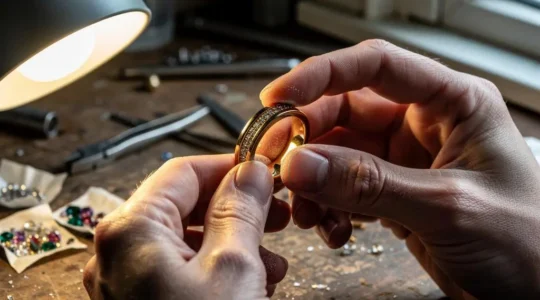
Why Do Hidden Metallic Rail Settings Look Seamless but Cost More to Repair Later?
A ring covered in uninterrupted gemstones can appear remarkably simple. From above, the diamonds seem to float against one another, with little or no metal interrupting the surface. Yet the structure responsible for that effect is often the most technically…
Lire la suite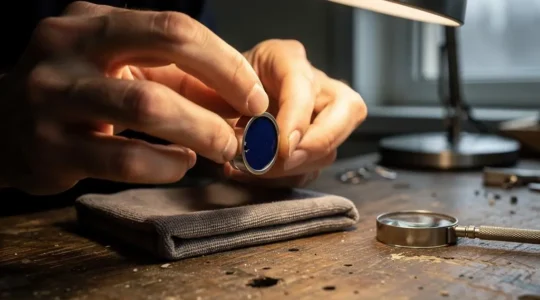
Why Do Powdered-Glass Jewellery Surfaces Chip Around Edges After a Few Wears?
A brilliant blue ring can look flawless in its box and develop a tiny rough patch along the setting after only a few wears. That does not automatically mean its owner handled it carelessly. Glass is hard enough to resist…
Lire la suite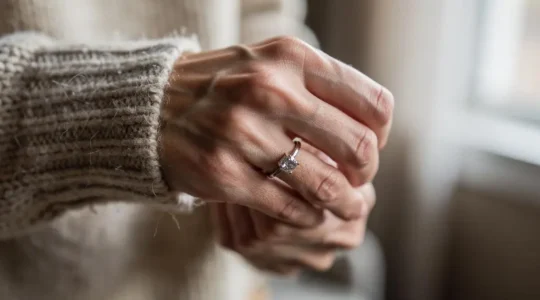
Which Stone Setting Technique Is Best if You Catch Your Ring on Everything You Wear?
If your ring catches on jumpers, gloves or jacket sleeves several times a week, the problem may be the setting rather than the gemstone. A raised prong, an exposed gallery or a poorly finished metal edge can catch fabric even…
Lire la suite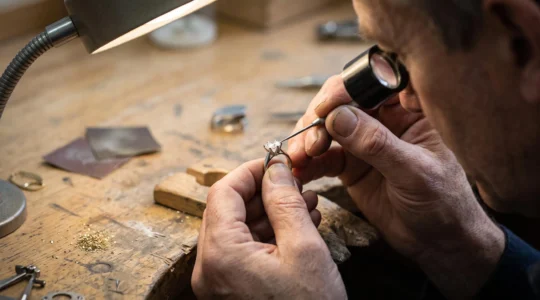
Why Do Stones Fall Out Even When the Ring Looks Perfect From the Top?
A gemstone can look perfectly centred, brilliant and undamaged while the metal holding it has already started to fail. The problem is often hidden at the bearing, where a prong contacts the stone, or beneath the visible setting. An attractive…
Lire la suite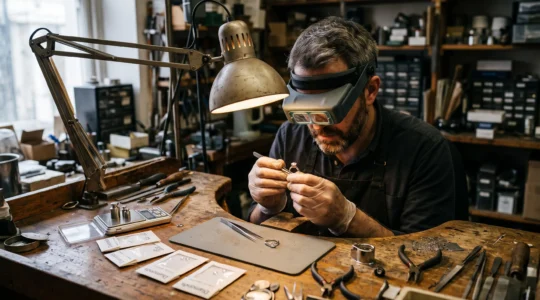
Why Does a Bench Jeweller Ask So Many Questions Before Agreeing to a “Simple” Repair?
A ring needs resizing. A stone feels loose. A chain has broken at one link. To its owner, the problem looks obvious, and the solution ought to be quick. Yet the bench jeweller asks when the damage appeared, whether the…
Lire la suite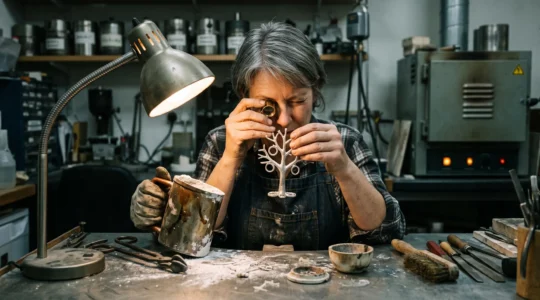
Why Do Fine Details Disappear in Castings Even When the Wax Model Was Crisp?
A wax model can carry perfectly defined engraving, sharp relief and precise edges, yet the finished metal casting may look grainy, rounded or unexpectedly shallow. The discrepancy does not necessarily mean the wax was defective. Fine-detail reproduction depends on what…
Lire la suite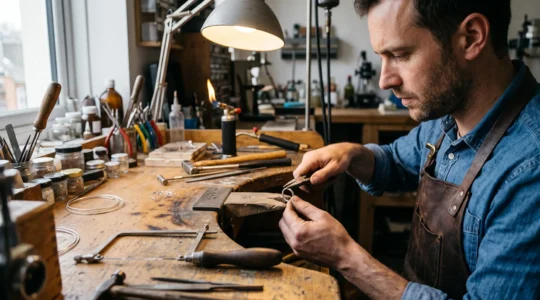
Which Specialised Hand Tool Upgrades Actually Improve Jewellery Precision Fastest?
The fastest improvement in jewellery precision rarely comes from buying the most expensive tool available. It comes from identifying the operation where a tool introduces movement, excessive force, poor contact or inconsistent control, then addressing that specific weakness. For an…
Lire la suite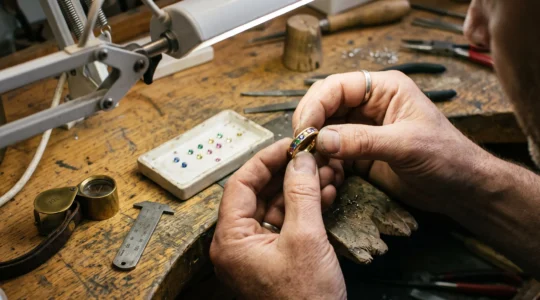
Why Do Calibrated Coloured Stones Make Multi-Stone Designs Look “Expensive” Even at Small Sizes?
A row of small coloured gemstones can look more carefully made than a ring containing a much larger central stone. The difference often comes down to something less glamorous than carat weight: how consistently the stones have been cut, matched…
Lire la suite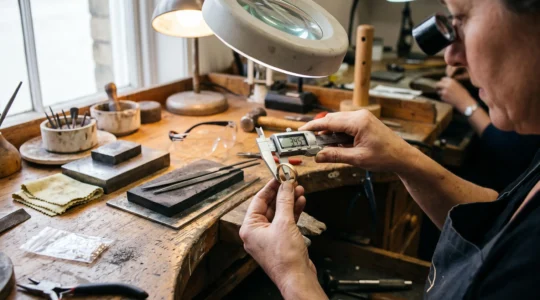
What Actually Increases Jewellery Durability for Daily Wear Without Making It Look Bulky?
A ring does not need to look heavy to withstand daily wear. What matters is whether enough metal remains in the places that carry bending forces, whether the gemstone setting protects vulnerable edges, and whether the construction can be maintained…
Lire la suite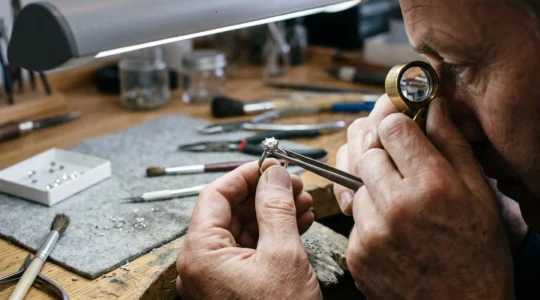
Why Do Platinum Frameworks Hold Stones Securely Even When the Prongs Look Thin?
Thin platinum prongs can hold a diamond securely because platinum combines useful toughness, ductility and resistance to brittle fracture with the ability to form precisely fitted stone settings. A skilled setter can shape relatively delicate prongs around a gemstone without…
Lire la suite