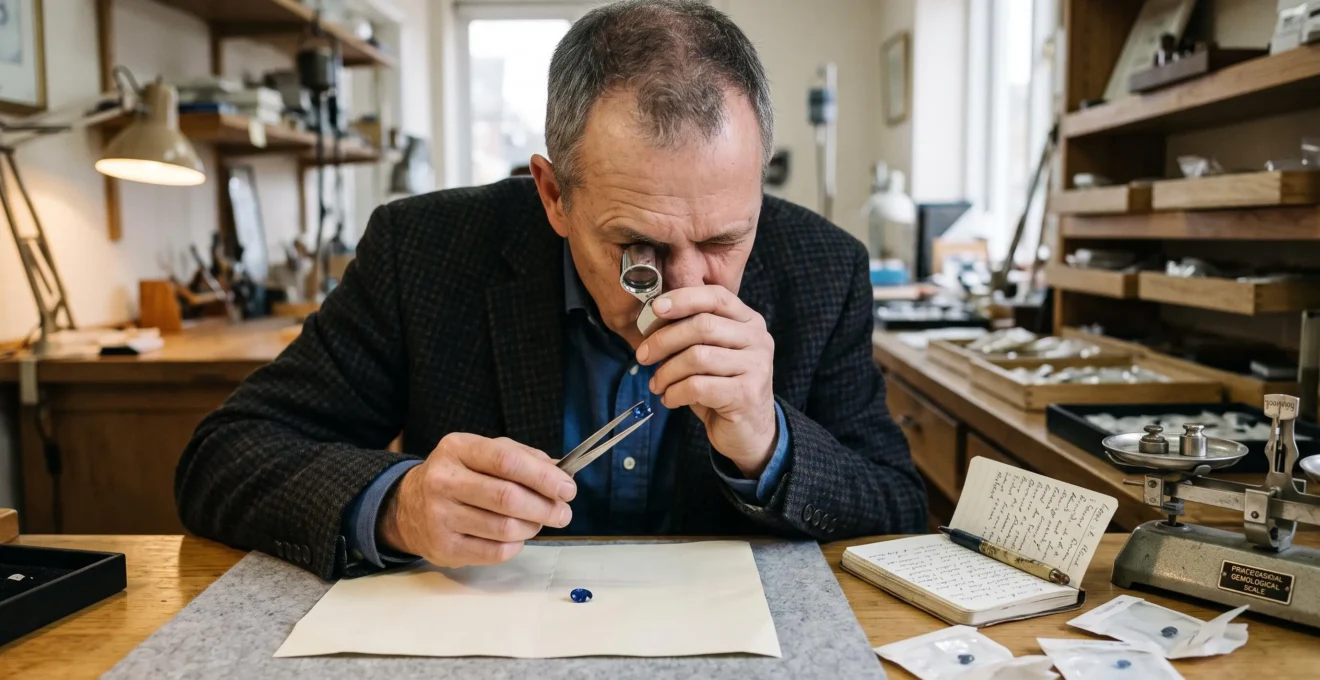
A gemstone described as « exotic » may be genuinely unusual, visually distinctive, or difficult to source. It may also be an ordinary example of a less familiar mineral being sold with an extraordinary story. The word itself does not establish rarity, quality, natural origin, treatment status, or value.
That distinction matters when choosing stones such as spinel, tourmaline, garnet, zircon, or tanzanite. Their appeal often comes from colours and optical effects that differ from conventional jewellery choices. Yet a beautiful appearance does not tell you whether a stone has been enhanced, whether it will tolerate daily wear, or whether its asking price is defensible.
The practical approach is to separate three questions: What exactly is the gemstone? What condition is it in? And what evidence supports the premium? A convincing seller should be able to explain these matters without relying on the word « exotic ».
For a buyer considering an unusual gemstone ring, those answers can be more valuable than an elaborate rarity narrative.
Exotic gemstones: what buyers need to know
- « Exotic » is a descriptive marketing term, not an independent gemological quality grade. Compare identifiable characteristics rather than labels.
- Check treatments, hardness, toughness, stability, inclusions, and setting compatibility before committing to a purchase.
- For expensive or difficult-to-return stones, obtain suitable independent identification and treatment evidence before the sale becomes final.
- Why Are “Exotic Gems” More Likely to Have Vague Grading and Big Price Swings?
- How to Vet an Exotic Gem for Treatments and Wearability Before You Set It in a Ring
- Exotic Gem or Classic Sapphire: Which Should You Choose for a Ring You Wear 5 Days a Week?
- The Setting Choice That Cracks Fragile Exotic Gems Faster Than You’d Expect
- When Should You Request a Lab Report for an Exotic Gem to Avoid a No-Return Surprise?
- Why Can One Inclusion Be Harmless While Another Makes a Stone Likely to Crack?
- Why Do Step Cuts Make Tiny Inclusions Look Bigger in Normal Indoor Lighting?
- Why Does “Eye-Clean” Clarity Matter for Some Gems but Barely Show on Others?
Why Are “Exotic Gems” More Likely to Have Vague Grading and Big Price Swings?
Exotic gemstones can attract inconsistent descriptions and widely varying prices because coloured stones lack a universal overall quality-grading system comparable to diamond grading. Less familiar materials also offer buyers fewer straightforward comparisons. Genuine differences in colour, treatment, origin, and availability can affect value, but promotional labels can make those differences harder to assess.
The first problem is terminology. A seller might describe a tourmaline as « Paraiba-like » or a spinel as « Burmese-grade ». Such expressions can evoke desirable colours or prestigious origins without establishing that the gemstone possesses a particular identity, geographic provenance, or independently recognised grade.
This is not a problem confined to unusual materials. According to GIA’s explanation of coloured gemstone grading, the institute does not assign overall quality grades to sapphires or other coloured gemstones. Identification reports instead document characteristics such as measurements, colour, detectable treatments, and, when possible, geographic origin.
Consequently, a seller’s quality language should never be mistaken for an independent laboratory assessment.
The second problem is comparability. Supply from individual deposits may be irregular, and stones of the same mineral species can differ considerably in commercially important characteristics. A particularly vivid spinel should not automatically be compared with a paler stone simply because both share a mineral name.
A practical way to evaluate an asking price is to identify which of three purchasing situations applies.
| Pricing situation | What supports comparison | Buyer’s response |
|---|---|---|
| Relatively comparable material | Multiple listings with similar species, colour, weight, cut, and disclosed treatments | Compare actual specifications and selling conditions rather than advertised rarity. |
| Semi-collectible material | Specialised dealer comparisons and individual characteristics | Request explanations of premiums and, where relevant, independent identification. |
| Exceptional or one-off material | Limited close comparisons and individual negotiation | Set a personal maximum price and require stronger documentation before committing. |
These are buyer-oriented categories, not formal market classifications. A gemstone may sit between them.
Ask the seller: « Which specific, verifiable characteristics make this stone cost more than the alternatives? » A useful answer discusses observable colour, cut, size, condition, treatment, or documented origin. An answer consisting only of a mine story or an exotic-sounding label leaves the premium unexplained.
A large price difference is not automatically suspicious. The objective is to establish what explains it, rather than assuming that every expensive stone is exceptional or every cheaper one is misrepresented.
How to Vet an Exotic Gem for Treatments and Wearability Before You Set It in a Ring
Before setting an exotic gemstone in a ring, establish its identity, request a complete treatment declaration, and assess three separate durability properties: hardness, toughness, and stability. Obtain the seller’s answers in writing and discuss the proposed setting with a jeweller familiar with the material. Visual appeal alone cannot establish whether a stone is suitable for daily use.
Begin with an open-ended question: « What treatments or enhancements has this gemstone received, and what evidence supports that information? » Follow up specifically about heating, diffusion, fracture filling, irradiation, oiling, and any other relevant process.
Then ask a second question: « If an independent laboratory examined this stone, what findings would you expect the report to contain? » This distinguishes a confident, documented representation from a vague assertion that the gemstone is simply « natural ».
Natural origin does not mean untreated. Laboratory-grown material may share the chemical and physical properties of its natural counterpart, while an imitation may only resemble it. An assembled stone introduces another question about its construction.
The FTC’s consumer advice on buying gemstones explains that treatments can affect appearance, durability, value, and care requirements. Its treatment-disclosure rules concern the United States; buyers elsewhere should check the protections applicable to their purchase.
Wearability requires a different assessment. The Mohs hardness scale tells you about resistance to scratching, not how readily a stone fractures or reacts to environmental exposure.
| Property | What it measures | Practical buying question |
|---|---|---|
| Hardness | Resistance to scratching and abrasion | How readily might the surface show wear? |
| Toughness | Resistance to chipping and breaking | Are corners, edges, inclusions, or cleavage planes vulnerable to impacts? |
| Stability | Resistance to environmental conditions | Could heat, light, chemicals, moisture changes, or cleaning methods damage the stone? |
For example, an emerald may have respectable scratch resistance yet still require caution because of fractures and potential clarity enhancement. An opal presents a different set of care concerns. Tourmaline suitability depends partly on the individual stone’s condition, cut, and intended use.
A filled gemstone can create repair complications that a conventionally heat-treated stone may not. Heating, solvents, and ultrasonic cleaning are not interchangeable risks across treatments or species.
Five checks to complete before paying for an exotic gemstone
- Confirm identity: obtain a written description specifying the gemstone species or variety and whether it is natural, laboratory-grown, imitation, or assembled.
- Document enhancements: request an itemised treatment declaration, including explicit uncertainty where treatment status is not established.
- Assess wearability: record the hardness, toughness, and stability questions relevant to the intended ring use, with a jeweller’s assessment where necessary.
- Review the setting: obtain a written setting recommendation identifying vulnerable areas and anticipated maintenance constraints.
- Secure purchase protection: retain the invoice, seller representations, applicable care instructions, and written return conditions.
Treatment disclosure is not merely about preserving value. It also helps determine which repairs and cleaning methods remain appropriate. A buyer choosing a decorative pendant may accept trade-offs that would be unacceptable in an everyday ring.
Once identity, treatment, and wearability are reasonably established, the next decision is whether the stone’s distinctiveness justifies the demands of wearing it regularly.
Exotic Gem or Classic Sapphire: Which Should You Choose for a Ring You Wear 5 Days a Week?
For a ring worn five days a week, sapphire is generally a more forgiving choice than many fragile exotic gemstones, although neither is damage-proof. Sapphire combines strong scratch resistance with practical jewellery durability. An unusual gemstone can still be suitable, but the decision should account for its individual vulnerabilities, protective setting, maintenance requirements, and replacement difficulty.
Corundum, the mineral family containing sapphire and ruby, has a Mohs hardness of 9. This makes sapphire a useful benchmark for resisting everyday abrasion, although hardness alone does not guarantee that a particular stone will survive every impact.
The distinction matters when a buyer is attracted to tanzanite, opal, emerald, or another unusual material with different structural or stability concerns.
Instead of asking which gemstone looks better, think in terms of a wearability budget: how much additional care, exposure limitation, and potential repair difficulty are you willing to accept for a particular colour or visual character?
| Consideration | Classic sapphire | Fragile exotic gemstone |
|---|---|---|
| Scratch resistance | Generally strong | Varies substantially by material |
| Impact vulnerability | Still capable of chipping or fracturing | May require greater protection, depending on structure and condition |
| Cleaning | Depends on treatments and stone condition | May involve narrower cleaning options |
| Resizing and repair | Requires appropriate precautions | May require removal before heat or other work |
| Replacement | Potentially easier to find a comparable appearance | Distinctive colour or inclusions may complicate matching |
Consider the costs that arrive after purchase. A delicate gemstone may require removal before a ring is soldered or resized. A highly individual stone may be difficult to replace with something visually comparable. Insurance documentation can also be more involved where close market comparisons are limited.
None of these considerations makes an exotic gemstone inherently unsuitable. An individual spinel, for example, may be a practical ring candidate after an appropriate assessment. Conversely, a damaged or heavily included sapphire deserves caution despite its mineral identity.
There is also a middle path: fancy-colour sapphires. Pink, yellow, orange-pink, and colour-change examples can provide less conventional appearances while retaining corundum’s material properties. Their treatments and descriptions still require verification; a fashionable colour name is not a substitute for identification.
Imagine two hypothetical rings. One contains an unusually coloured but vulnerable stone in an exposed setting. The other contains a fancy sapphire with a more protective design. If both look appealing, the relevant distinction may be the consequence of an accidental strike rather than their appearance on purchase day.
The less replaceable the gemstone, the more important it becomes to design the ring around foreseeable impacts rather than assuming careful ownership will prevent every accident.
The Setting Choice That Cracks Fragile Exotic Gems Faster Than You’d Expect
Exposed settings can shorten the useful life of a fragile gemstone by leaving vulnerable edges, corners, or girdle areas open to impacts. High prongs may increase exposure, while tension-style designs can introduce mechanical stresses unsuitable for some stones. A protective bezel often helps, but its suitability depends on the gemstone’s structure, condition, and repair needs.
A gemstone does not experience daily wear as an abstract mineral. It encounters forces through the metal holding it in place. A knock against a hard surface can concentrate stress at an exposed point, particularly when a fracture or cleavage-related weakness is present.
High-set prongs deserve attention because they can leave the gemstone elevated above the finger and exposed around its perimeter. This does not mean every high-prong design is defective, nor that every low setting is protective. The outcome depends on the stone’s geometry, the metalwork, and how the ring is worn.
Tension and channel settings require particular judgement. Their appearance may suggest security, but some designs rely on precise contact and mechanical force. Such arrangements can complicate future adjustments or place unwanted stress on a vulnerable gemstone.
Bezels offer a different compromise. Metal surrounds more of the stone’s perimeter, which can help shield its edges from direct knocks. However, a bezel may conceal part of a distinctive colour pattern, make cleaning access less convenient, or complicate removal during later repairs.
A bezel should therefore be selected because its protective advantages suit the individual stone, not because the term automatically guarantees safety.
Setting design should also respond to cut and inclusion placement. A surface-reaching fracture near a proposed prong contact point is a materially different concern from a small internal inclusion away from vulnerable edges.
When commissioning a custom stone, discuss crystal orientation, inclusions, and exposed areas with the cutter and setter before final cutting decisions are made. Once the gem is finished, changing its geometry may involve losing material or altering its appearance.
GIA’s educational discussion of emerald quality explains why cutters must consider fractures, colour, and vulnerable corners together. The principle is relevant when evaluating the structural consequences of a setting, although each gem material requires its own assessment.
Future repairs are equally important. An oiled emerald, opal, or other heat- or treatment-sensitive gemstone may need special precautions during soldering, cleaning, or refurbishment. For some designs, safe stone removal may be difficult or destructive.
Before approving the ring, ask the jeweller which parts of the stone will remain exposed, whether the design can be serviced safely, and what repair procedures must be avoided.
A setting should protect the qualities that made the stone attractive without creating avoidable stress or making ordinary maintenance impractical. The next safeguard is independent documentation of the gemstone itself.
When Should You Request a Lab Report for an Exotic Gem to Avoid a No-Return Surprise?
Request an independent gemstone report before committing to a purchase when the price represents a significant part of your budget, treatment status is important, origin claims affect the premium, or returns are restricted. A report is especially useful when material identity or enhancements cannot be established visually. The critical issue is obtaining appropriate evidence while you can still decline the transaction.
There is no universal purchase price at which every gemstone needs laboratory testing. A modest purchase for one buyer may be financially consequential for another.
Instead, consider what would happen if the seller’s most important claim turned out to be incorrect. If a stone advertised as untreated proved enhanced, would you still want it at the agreed price? If a prestigious geographic origin could not be established, would the purchase remain acceptable?
If either answer is no, arrange suitable testing before the sale is final.
Major gemological laboratories offer different identification and treatment-reporting services. Relevant providers may include GIA, IGI, AGL, Gübelin, and SSEF, depending on the material and the question being investigated. Buyers should confirm the chosen laboratory’s current service scope, fees, submission arrangements, and turnaround directly.
Testing may take time and involve separate costs. The seller and buyer should agree in advance who pays, which findings matter, and what happens if the report contradicts the description.
A practical written condition might specify that the purchase depends on independent confirmation of a stated gemstone identity and treatment status. Any geographic-origin condition should acknowledge that a laboratory may be unable to provide a conclusive origin opinion.
Most importantly, a gemstone identification report is not a market appraisal. It can provide evidence about the material and certain treatments, but it does not establish that an asking price is fair or that the stone is aesthetically exceptional.
Once a report is available, verify that it describes the stone being offered. Compare the reported weight, dimensions, shape, and cutting style with the gemstone. Confirm the report number through the issuing laboratory’s official verification service where available.
A report number copied into a sales listing is not sufficient by itself. Differences between the document and the physical stone deserve explanation before payment.
For online purchases, written return terms matter particularly because the buyer may have limited opportunities to examine the stone. Check whether independent inspection is permitted, when the return period begins, and whether any conditions apply to loose stones that are subsequently set.
Laboratory documentation reduces uncertainty about specified gemological characteristics. It cannot eliminate every commercial risk, particularly when the stone’s structural condition or visual character is central to the buying decision.
Why Can One Inclusion Be Harmless While Another Makes a Stone Likely to Crack?
An inclusion’s structural risk depends more on its nature, location, and relationship to existing fractures than on how visible it appears. Fine internal needles may have little practical effect on durability, while a fracture reaching the surface near a vulnerable edge may provide a path for further cracking. Appearance alone cannot reliably establish the danger.
Inclusions encompass different features: mineral crystals, needles, fluid-filled cavities, growth structures, and fractures. They do not all behave alike.
Some solid inclusions and surrounding host crystals respond differently to temperature changes. Under particular conditions, this can contribute to local stress. Fractures and feathers present a different concern because an existing discontinuity can extend when sufficient force is applied.
The relationship between an inclusion and the gemstone’s surface is often important. A fracture reaching the girdle, corner, or another exposed area may deserve closer inspection before the stone is mounted.
A small internal feature that does not weaken a critical area may be primarily aesthetic. But even an inclusion hidden beneath the table should not automatically be considered harmless. Its actual structure matters more than a simple rule about position.
GIA’s emerald quality factors explain that emeralds frequently contain visible inclusions and fractures, and that cutters must account for those features when shaping stones. The presence of inclusions does not, by itself, make an emerald unacceptable.
As an initial visual screening method, inspect a gemstone’s edges, corners, and areas where metal will contact it. Look for fractures reaching the surface, obvious chips, or inclusions intersecting vulnerable facet junctions. This is a triage technique, not a structural diagnosis.
Magnification can reveal features that ordinary viewing misses, but identifying their significance may require professional examination. A buyer should not attempt to decide fracture risk solely from a photograph or a seller’s statement that inclusions are « natural character ».
Environmental exposure also changes the assessment. A gemstone containing fluid inclusions or fracture fillings may react differently to certain heat-intensive repairs or cleaning procedures. A stone that has remained undamaged in a protected piece of jewellery may encounter much greater mechanical stress when moved into a frequently worn ring.
The comparison should therefore be between the inclusion, the material, and the intended use, not simply between a visibly clean gemstone and an included one.
Once a gemstone’s condition is understood, its cut becomes the next consideration: the facet arrangement can make an otherwise unobtrusive inclusion much easier to see.
Why Do Step Cuts Make Tiny Inclusions Look Bigger in Normal Indoor Lighting?
Step cuts can make inclusions more noticeable because their broad, relatively open facets generally produce less visually disruptive sparkle than many brilliant cuts. Without dense reflections to mask internal features, the eye may perceive an inclusion more clearly. The effect depends on the stone’s transparency, colour, inclusion position, proportions, and lighting conditions.
Emerald cuts, Asscher-style cuts, and other step-cut arrangements use tiers of facets that produce relatively broad reflections. Their visual appeal often comes from geometric structure and transparent-looking areas rather than continuous flashes of brilliance.
Those characteristics can expose internal details. An inclusion beneath the table may remain visible as the stone moves, particularly when the surrounding material is pale or highly transparent.
Brilliant cuts generally use a more complex facet arrangement to create numerous reflections and flashes. These can visually interrupt or disguise some inclusions, although they do not guarantee that every feature becomes invisible.
The result is a practical distinction: two gemstones with similar internal features can look different because of how their facets interact with light.
Consider a hypothetical pair of similarly coloured stones containing comparable small inclusions. The first has a step cut with a broad, open central appearance. The second has a lively brilliant cut. The inclusion might attract attention immediately in the first stone while becoming less noticeable among the reflections in the second.
This does not establish a universal ranking of clarity between the cuts. An inclusion’s position, the stone’s transparency, and the quality of cutting can outweigh a general expectation about facet style.
For practical inspection, use ordinary conditions rather than relying exclusively on a jeweller’s intense display lighting. Examine the actual gemstone in diffuse daylight and normal indoor illumination. View it at a comfortable distance, then rotate it gradually to see whether an inclusion remains conspicuous.
Ask for a video that shows the stone moving under representative lighting if an in-person inspection is not possible. A still photograph can conceal or exaggerate an inclusion depending on focus, reflections, and exposure.
A visibly included step cut may still offer excellent enjoyment and value, provided the inclusion is acceptable to the buyer and does not create an identified structural concern.
Conversely, an impressive-sounding clarity description is not a substitute for examining how that specific inclusion appears in that specific cut.
These optical differences explain why buyers need to define « eye-clean » in practical viewing conditions rather than treating the expression as a universal quality grade.
What to remember before the final clarity check
- Visible inclusions and structurally dangerous inclusions are not necessarily the same thing.
- Cut, colour depth, and lighting can change whether a small internal feature attracts attention.
- Decide how the gemstone must look during normal use before paying extra for a seller’s clarity description.
Why Does “Eye-Clean” Clarity Matter for Some Gems but Barely Show on Others?
« Eye-clean » matters most when a gemstone’s inclusions would otherwise be noticeable during ordinary viewing. Its usefulness depends on transparency, colour, cut, lighting, and inspection distance. Darker stones can disguise certain internal features, while pale or openly faceted stones may reveal them. The term describes an observed appearance under particular conditions, not an independently universal clarity grade.
For buying purposes, define eye-clean as having no inclusions visible to the unaided eye under agreed, normal viewing conditions. The seller and buyer should establish those conditions rather than assuming they share the same definition.
A useful description would specify ordinary indoor light, approximate viewing distance, and whether the stone is examined face-up. Without those details, « eye-clean » leaves room for disagreement.
Colour changes visibility. Deeply saturated garnets or dark blue tourmalines may conceal small inclusions that would be more apparent in lighter examples. Pale aquamarines, morganites, and light-coloured spinels may offer less visual masking, especially when their cutting creates broad, transparent-looking areas.
Cut matters as well. A gemstone with strong reflections may distract from an inclusion; an open step cut may draw attention to it. Neither appearance tells the buyer whether the feature compromises durability.
Clarity expectations should also reflect the purchase goal. For a frequently worn ring, the relevant question is often whether the stone looks pleasing during normal interaction. Paying substantially more for an improvement visible only under magnification may offer little practical benefit to that particular buyer.
For a collector examining an unusual stone closely, the calculation may be different. Certain inclusion patterns can be meaningful features of a specimen, although their presence does not automatically establish rarity or increase market value.
The critical distinction is between three separate judgments: whether an inclusion is visible, whether it is structurally significant, and whether its appearance matters to the buyer. A seller’s vague clarity label should not combine those questions into a single claim of exceptional quality.
When evaluating an exotic gemstone remotely, request face-up photographs and moving footage under ordinary lighting. Compare the appearance with the seller’s written description and obtain professional advice if any feature raises a durability concern.
Before purchasing, define the appearance you will accept, verify the stone’s identity and treatments, and confirm that its setting suits your intended wear. If the premium cannot be explained through characteristics you can examine or document, there is no obligation to pay it.
Does an exotic gemstone automatically have better resale potential?
No. The word « exotic » does not establish resale demand or market value. A gemstone’s desirability may depend on its identity, colour, condition, treatments, documented provenance, and the availability of interested buyers. Unusual material can also be difficult to price or replace. Treat resale expectations as uncertain unless supported by appropriate market evidence.
Can a heated gemstone still be a good purchase?
Yes. Treatment does not automatically make a gemstone unattractive or unsuitable for jewellery. The important questions are whether the treatment is accurately disclosed, whether it affects stability or care, and whether the price reflects the stone’s actual characteristics. Different enhancement methods have different implications, so avoid treating all heated, filled, or diffused gems as equivalent.
Is buying an exotic gemstone online inherently unsafe?
Not inherently. Online buying becomes riskier when identity, treatment disclosures, inspection conditions, and return terms are unclear. Request representative photographs or video, written material and treatment descriptions, and independent documentation where the financial stakes justify it. Confirm the applicable return policy before payment.
Should you insure an unusual gemstone immediately after purchasing it?
Consider insurance whenever loss or damage would create a meaningful financial burden. Ask the prospective insurer what appraisal documentation is required, whether accidental damage is covered, and how an unusual or difficult-to-replace gemstone would be valued. Laboratory identification and insurance valuation serve different purposes, so one document may not replace the other.