Techniques and Craftsmanship
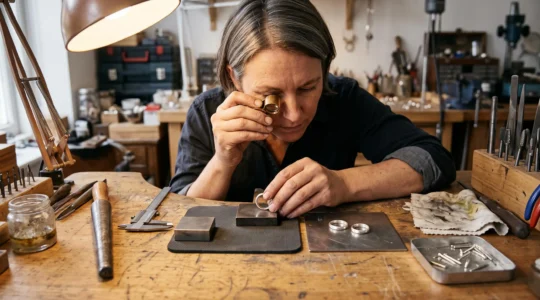
Why Do Two Pieces Made From “the Same Materials” Age So Differently After 12 Months?
Place two newly polished sterling silver rings side by side. Both carry the same metal description, have similar dimensions and look equally well finished. After 12 months of ordinary wear, however, one may remain structurally sound while the other develops…
Lire la suite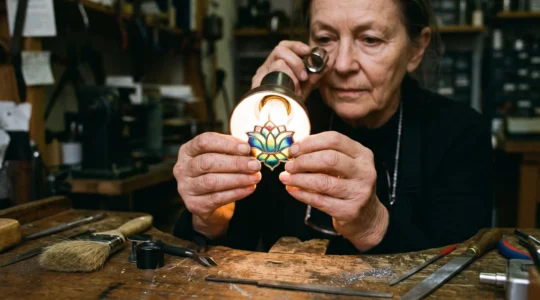
Why Does Plique-à-Jour Enamel Cost So Much, and Why Can It Still Crack Easily?
Plique-à-jour enamel occupies an unusual position in fine jewellery: it delivers the luminous colour of stained glass in a miniature, wearable form, yet sacrifices the continuous metal backing that protects many other enamel techniques. That combination explains both its appeal…
Lire la suite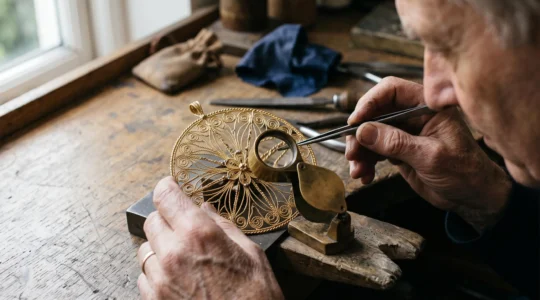
Why Does Filigree Jewellery Snag and Bend More Than You Expect Even When It’s “Fine Gold”?
Filigree jewellery can be made from genuine gold and still bend, snag or suffer permanent damage during ordinary daily activities. The apparent contradiction disappears once purity is separated from construction: gold content describes the metal’s composition, while a piece’s geometry,…
Lire la suite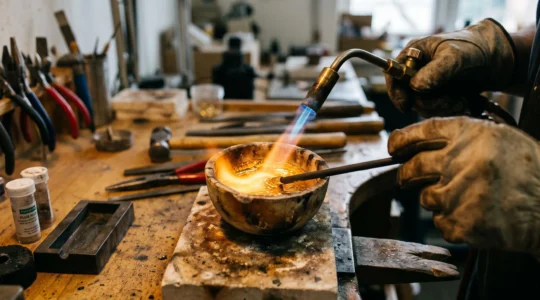
Why Can Molten Alloys Produce Slightly Different Gold Colours Between Two “Identical” Batches?
Two gold jewellery pieces can carry the same 18-karat hallmark yet display subtly different shades of yellow or rose. The reason is that gold fineness specifies the proportion of pure gold, not one universal recipe for the remaining alloying metals….
Lire la suite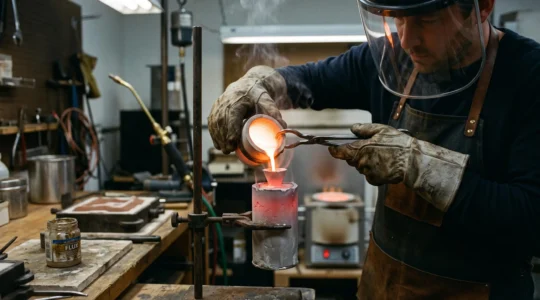
Why Does Metal Pouring Temperature Control Affect Both Strength and Surface Finish?
A cast ring can look flawless when it leaves the mould yet crack during stone setting. Another piece may survive finishing but reveal tiny pits after polishing. Both problems can begin before the metal enters the mould, when pouring temperature,…
Lire la suite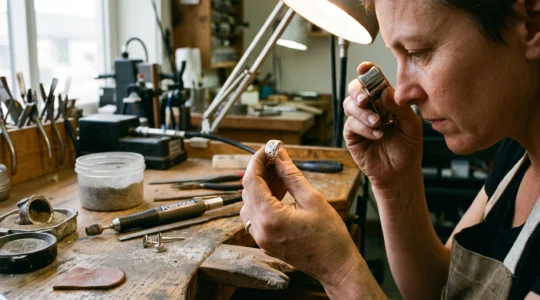
Why Do Lost Wax Cast Pieces Sometimes Come Out With Rough Surfaces Even After Polishing?
A lost wax casting can look perfectly reasonable when it leaves the investment flask, yet develop pinholes, dull patches or uneven texture as soon as a jeweller starts filing and polishing it. The immediate temptation is to change polishing compounds,…
Lire la suite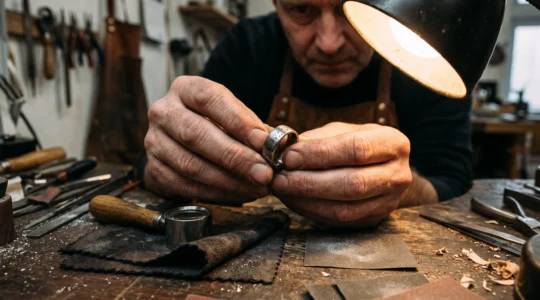
Why Can Jewellery Made From Poor Metal Stock Develop Porosity Even With Good Craftsmanship?
A jewellery piece can develop pits, weak spots or unexpected fractures even when the maker has excellent casting and finishing skills. The reason is that craftsmanship cannot compensate for every defect already present in the metal. Alloy composition, contamination, internal…
Lire la suite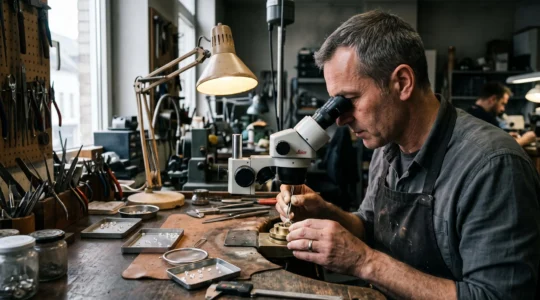
Why Do Jewellers Use High-Magnification Microscopes if You’ll Never See Those Flaws in Real Life?
A jeweller can spend several minutes examining a diamond under a microscope and still recommend it confidently to a customer who will never see its inclusions in everyday life. There is no contradiction: **magnification reveals information, not necessarily visible defects**….
Lire la suite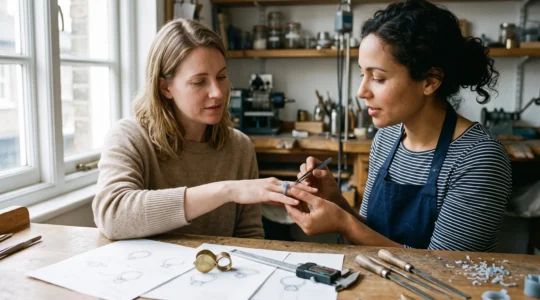
Why Do Wax Prototypes Save People From Expensive Regret in Custom Jewellery?
A custom ring can look perfect in a sketch, a computer-generated image and even a detailed 3D model, yet feel unexpectedly bulky, awkward or uncomfortable when worn. A wax prototype gives the client an opportunity to evaluate the physical design…
Lire la suite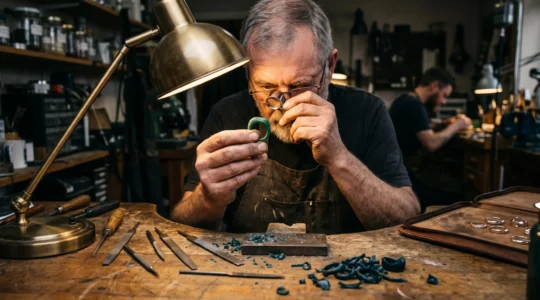
Why Does the Model Maker Matter More Than the CAD File for How a Ring Feels on Hand?
A ring can look immaculate in a CAD rendering and still press against the finger, rotate unexpectedly or catch on clothing once it is made. The difference often lies in details too small to notice on screen: an interior edge,…
Lire la suite