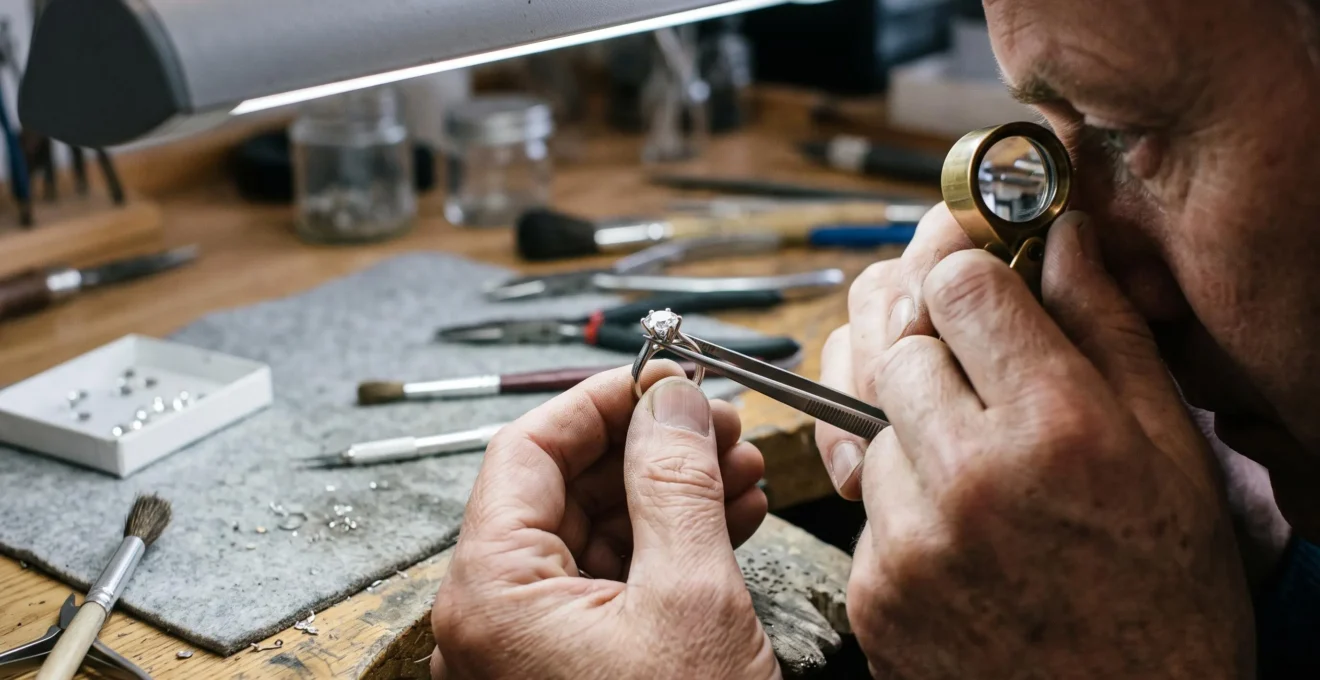
Thin platinum prongs can hold a diamond securely because platinum combines useful toughness, ductility and resistance to brittle fracture with the ability to form precisely fitted stone settings. A skilled setter can shape relatively delicate prongs around a gemstone without necessarily sacrificing the contact and support required to retain it.
The important distinction is between a prong that looks slender and one that is structurally inadequate. Platinum’s material properties help jewellers create refined settings, but they do not eliminate the need for sufficient metal, sound construction, correctly positioned prong tips and periodic professional inspection.
Platinum also wears differently from many gold alloys. Surface scratches commonly move metal rather than immediately removing it, creating a characteristic patina. That does not mean platinum is indestructible or that its prongs retain their original dimensions forever.
For engagement-ring buyers, understanding these differences makes it easier to judge structural security, maintenance requirements, comfort and long-term ownership costs without relying on sales claims.
Platinum prongs: what matters most
- Secure settings depend on metal and workmanship. Platinum’s toughness supports fine prong designs, but proper stone seating, prong dimensions and setting quality remain essential.
- Patina is not automatically damage. Ordinary surface marks are largely cosmetic, whereas bent, cracked, deeply notched or worn prong tips need professional attention.
- Platinum is low-plating-maintenance, not maintenance-free. It needs no rhodium coating to remain naturally white, but cleaning, stone-security inspections and occasional refinishing still matter.
- Why Does Platinum Develop a Patina Instead of « Wearing Away » Like Some Gold Alloys?
- How to Tell if a Ring Uses Platinum Structurally or Just as a Marketing Label?
- Platinum or White Gold: Which Should You Choose if You Don’t Want Annual Maintenance?
- The Platinum Surprise That Makes Some Rings Feel Uncomfortable After a Full Day
- When Should You Polish Platinum if You Want Shine Without Thinning Details?
- How to Compare Gold, Platinum, and Silver in Under 10 Minutes Without Getting Upsold?
- Palladium White Gold or Platinum: Which Should You Choose if You Hate Re-Plating?
- Why Do Two « Same Karat » Gold Rings Feel Different on Skin and Wear Differently?
Why Does Platinum Develop a Patina Instead of « Wearing Away » Like Some Gold Alloys?
Platinum develops a patina because everyday contact creates microscopic scratches and surface deformation that frequently displace metal rather than immediately removing it. Over time, these tiny changes scatter light and reduce the original mirror-like shine. Some gold alloys also undergo surface displacement, but their wear patterns can differ. Neither metal is completely immune to material loss.
The distinction matters particularly around a gemstone. When a platinum prong receives a minor scratch, some of its metal may move into adjacent raised areas instead of disappearing as debris. This tendency can help preserve material over years of ordinary wear. However, severe abrasion, repeated polishing and mechanical damage can still remove platinum or reduce the effective thickness of a prong.
The Gemological Institute of America describes platinum as strong and less brittle than gold alloy, making platinum prongs less likely to break in suitable settings. Its comparison of white jewellery metals also explains the practical differences between platinum, white gold, palladium and silver.
Patina changes appearance, not necessarily stone security. A slightly dull prong can still grip a diamond securely when its tip remains correctly positioned and the setting is undamaged. Conversely, a newly polished ring can have an insecure stone if its prongs were poorly fitted or have become displaced.
A useful visual assessment separates two conditions:
- Fine surface scratches: shallow, widespread marks that change the finish without obviously altering the shape of the prong.
- Structural warning signs: pronounced grooves, deep notches, visibly flattened tips, cracks or prongs that no longer contact the gemstone correctly.
A loupe can help reveal the difference, although it cannot establish how much sound metal remains beneath the surface. A jeweller should evaluate suspicious defects rather than relying on appearance alone.
Some owners deliberately preserve platinum’s soft grey patina because it gives the ring a settled, understated appearance. Others prefer occasional refinishing to restore brightness. Neither choice indicates better ownership habits by itself.
Before choosing a ring for its supposed durability, however, verify that the components securing the gemstone are genuinely made from platinum.
How to Tell if a Ring Uses Platinum Structurally or Just as a Marketing Label?
To determine whether platinum provides structural support, check the ring’s metal markings and ask the jeweller which components are actually platinum. A solid platinum prong assembly behaves differently from a platinum-plated base metal. Marks such as Pt950 can indicate platinum alloy content, but a hallmark on the shank does not automatically establish the composition of the head.
The first step is to inspect the inside of the band with a jeweller’s loupe. Common platinum-related markings include PT950, 950 Plat and PLAT, although the meaning and acceptability of particular marks depend on the jurisdiction and accompanying purity information.
Under US Federal Trade Commission guidance, jewellery described simply as platinum without qualification should contain at least 95 % pure platinum. Other compositions require appropriate identification. The FTC’s guidance on advertising platinum jewellery explains distinctions between platinum-content descriptions, including 900Pt and 850Plat.
Buyers should not confuse these designations with descriptions such as « platinum-tone », « platinum finish » or « platinum-plated ». Those terms do not establish that the underlying structure is a solid platinum alloy.
Plating may eventually wear through and reveal a different-coloured underlying material. This can be a useful warning sign, although the absence of visible colour change is not proof that a ring is solid platinum.
Inspect the head and shank as separate components. A ring can combine a platinum setting head with a gold shank, or the reverse. Such constructions may be entirely legitimate, but the metal supporting the gemstone matters more to prong behaviour than the metal used elsewhere in the ring.
Ask the seller: « Is the entire prong assembly solid platinum, or is any part plated or made from another metal? » Request the alloy description for both the head and the shank, preferably in writing.
A hallmark is useful evidence, not a comprehensive authentication test. Its location, accompanying marks and applicable hallmarking system matter. For higher-value purchases or uncertain constructions, a qualified professional can assess the metal using appropriate verification methods.
Five checks before buying a platinum-set ring
- Examine the inside of the band under magnification and record the complete visible metal marking.
- Ask for the alloy composition of the setting head and obtain a written description identifying the prong material.
- Inspect the prong tips and stone seating with the jeweller and obtain confirmation that the setting has been checked.
- Request a written explanation of any plating, mixed-metal components and associated care requirements.
- Obtain a purchase quote and care-policy summary identifying the ring’s materials, inspection arrangements and potential refinishing services.
Once the construction is clear, the next decision is whether platinum’s maintenance characteristics justify its purchase price compared with white gold.
Platinum or White Gold: Which Should You Choose if You Don’t Want Annual Maintenance?
Platinum is generally the more straightforward choice when avoiding rhodium re-plating is a priority, because its naturally white appearance does not depend on a surface coating. White gold may need periodic re-plating to maintain a bright white finish, while platinum develops patina that can be polished if desired. Both metals still require stone-setting inspections.
Many white-gold engagement rings are rhodium-plated. This coating provides a bright finish, but repeated contact with clothing, surfaces and other objects gradually wears it down. How soon another plating treatment becomes desirable depends on the alloy, the original coating and the owner’s wear habits.
Some unplated white-gold alloys have a sufficiently pale natural colour for their owners, making regular rhodium treatment unnecessary. Buyers should therefore ask whether the particular ring is plated rather than assume all white gold requires the same routine.
Platinum avoids that coating-related issue, but its surface develops fine scratches and a diffuse grey-white finish. Polishing is typically an aesthetic choice, provided the ring remains structurally sound.
The more consequential difference can arise at the prongs. Platinum’s toughness and wear characteristics make it attractive for delicate gemstone settings. Gold-alloy prongs can also be secure and durable, but material loss, deformation or damage may eventually require repair or rebuilding. Platinum prongs are not exempt from those possibilities.
For an initial comparison, consider the practical trade-offs:
| Consideration | Platinum | White gold |
|---|---|---|
| White appearance | Naturally grey-white; no rhodium required | Depends on alloy; often rhodium-plated for brightness |
| Surface ageing | Develops characteristic patina | Scratches and coating wear vary by alloy and finish |
| Prong performance | Good toughness for properly designed fine settings | Varies with alloy, construction and workmanship |
| Routine professional care | Inspections; optional refinishing | Inspections; possible re-plating and refinishing |
| Initial price | Depends on market and manufacturing quote | Often lower in comparable retail offerings, but not universally |
| Lifetime ownership cost | Care, potential repairs and optional polishing | Care, potential repairs and possible re-plating |
Avoid treating the initial purchase premium as a fixed amount. Gold and platinum prices move independently, while ring weight, alloy composition, manufacturing and retail margins also affect the final quote.
For frequent daily wear, platinum can be appealing when the design provides adequate prong support and the owner accepts patina. White gold remains reasonable when budget, a particular design or lighter overall weight matters more.
Long-term convenience is only one part of the choice: platinum’s noticeably greater weight can also influence how comfortable a ring feels throughout the day.
The Platinum Surprise That Makes Some Rings Feel Uncomfortable After a Full Day
The surprise is platinum’s weight. Platinum is substantially denser than common jewellery gold alloys, so a ring with similar dimensions can feel noticeably heavier. Some wearers appreciate that substantial feel, while others find it uncomfortable during prolonged daily use. Band shape, ring balance and sizing can influence comfort as much as the metal itself.
A short shop fitting may not reveal how a ring behaves during ordinary activities. After several hours, a heavier setting may feel more prominent, particularly when the gemstone head is raised or the band is narrow.
Weight does not necessarily mean poor comfort. Some wearers enjoy the reassuring feel of platinum, while others prefer a lighter ring that is easier to forget they are wearing.
The distribution of weight matters. A large stone setting on a narrow shank can make a ring feel top-heavy, while a well-balanced design may feel more comfortable even when its total weight is greater.
When comparing models, ask to try a sample with a similar head, band width and approximate finished weight. Where the retailer allows an extended try-on with a suitable sample, assess the feel during ordinary, low-risk daily activities rather than relying on a brief fitting. Do not wear an unpaid or unapproved sample outside the retailer’s agreed conditions.
Several design choices can improve the wearing experience:
- A carefully proportioned shank can reduce unnecessary metal volume without compromising structural support.
- A comfort-fit interior may reduce pressure from sharp inner edges.
- A lower-profile gemstone setting can improve balance and reduce snagging.
- A platinum head paired with a compatible lighter gold-alloy shank may offer a different balance of weight, appearance and maintenance.
Finger size changes naturally with temperature, activity and time of day. A ring that feels comfortable during a brief fitting may become tight later, while an oversized ring can rotate more readily when its head is heavy.
For this reason, try sizing at more than one point during the day where practical, and discuss fit with a jeweller before ordering. Avoid choosing a dangerously tight fit simply to prevent rotation.
Once the right design and fit are established, preserving surface details becomes the next consideration, especially for rings with delicate prong tips or decorative engraving.
When Should You Polish Platinum if You Want Shine Without Thinning Details?
Polish platinum when its appearance genuinely bothers you, rather than following an automatic annual schedule. Professional refinishing can restore brightness, but abrasive polishing removes surface material and repeated aggressive treatment may soften delicate details. For rings with fine engraving, milgrain or slender prongs, selective finishing is usually preferable to repeatedly polishing the entire piece.
Platinum’s reputation for metal retention does not mean polishing is harmless. Surface scratches can redistribute metal, but conventional abrasive finishing removes some material to create a smoother reflective surface.
Repeated refinishing can gradually soften sharp edges and decorative textures, even when each individual session produces a pleasing result. Prong tips need particular attention because their contact with the stone is essential to the setting’s security.
The Gemological Institute of America’s technical benchmark for refinishing worn platinum describes burnishing followed by light buffing as a method for restoring suitable platinum jewellery while avoiding unnecessary metal removal associated with filing or abrasive techniques.
Burnishing uses pressure to smooth and redistribute surface metal. It is a professional finishing option, not proof that every scratch can be removed without material loss or that every ring is suitable for the same treatment.
For everyday maintenance, start with gentle cleaning rather than abrasive polishing. Where appropriate for the gemstone and setting, mild soap, lukewarm water and a soft brush can remove accumulated dirt. Rinse carefully and dry with a soft, clean cloth.
A suitable jewellery polishing cloth may improve surface appearance, but cloths containing polishing compounds can also be mildly abrasive. They should not be used indiscriminately on engraved details, delicate stone settings or sensitive gemstones.
Avoid toothpaste, harsh abrasives and home rotary tools. These can create uneven scratch patterns or remove material in areas that should remain precisely shaped.
Before professional polishing, ask the jeweller to inspect the setting and explain whether the work will involve burnishing, light buffing or more substantial surface correction.
Protect the prong tips first. Ask for controlled finishing around the setting head and preservation of the edges that secure the gemstone. Where the prongs are damaged, correction of the structural problem should take precedence over restoring shine.
The same attention to material properties can make the original shopping decision easier, especially when comparing platinum with less expensive white metals.
How to Compare Gold, Platinum, and Silver in Under 10 Minutes Without Getting Upsold?
Compare gold, platinum and silver by checking three things: weight, metal markings and whether the white appearance depends on plating. Platinum generally feels heavier and needs no rhodium coating to remain white. Gold’s properties depend on its alloy, while sterling silver is comparatively soft. These checks provide a useful starting point but cannot replace assessment of the setting’s workmanship.
In a jewellery shop, a brief structured comparison can reveal more than a lengthy sales presentation. Ask to inspect rings with broadly comparable dimensions, then evaluate the following characteristics.
| Check | What to look for | Why it matters |
|---|---|---|
| Weight | Compare similarly sized rings and ask for their finished weights | Density affects comfort and can support, but not prove, metal identification |
| Metal marking | Look for platinum fineness, gold karat or fineness, and sterling silver markings | Identifies claimed composition, subject to verification |
| Colour stability | Ask whether the surface is plated and what happens when the coating wears | Reveals likely appearance changes and potential refinishing needs |
Platinum’s characteristic heft and toughness can suit fine engagement-ring settings, but platinum is not scratch-proof or bend-proof.
White gold can provide attractive, secure settings when the alloy and design are appropriate. Its surface colour and maintenance depend on the particular alloy and any rhodium coating.
Sterling silver offers an accessible white-metal appearance, but its relative softness and greater susceptibility to deformation make it a less compelling choice for delicate prongs intended to secure a valuable engagement gemstone during sustained daily wear.
Watch for oversimplified sales claims. Describing platinum as indestructible, claiming every white-gold ring must be re-plated annually, or suggesting that identical-looking silver and platinum prongs provide equivalent long-term support ignores important differences in materials and construction.
A practical question is: « What should I expect to happen to this ring and its prongs after ten years of daily wear? »
A useful answer should address scratches, patina, potential coating wear, setting inspections and possible repairs. It should also acknowledge that wear depends on lifestyle and that no jeweller can guarantee a particular ring’s condition years into the future.
Ask the seller to explain what care services are included and which would be charged separately. This makes the comparison about ownership rather than day-one appearance.
For buyers specifically trying to avoid rhodium re-plating, another important distinction is whether white gold contains palladium or relies on a different whitening alloy.
Palladium White Gold or Platinum: Which Should You Choose if You Hate Re-Plating?
Choose platinum when the priority is a naturally white setting metal with proven suitability for fine prongs. Consider palladium white gold when you prefer a lighter gold alloy and want to avoid relying on rhodium plating for its colour. Whether palladium white gold can remain unplated depends on its exact composition and the shade you consider acceptable.
White gold is not a single uniform material. It is gold alloyed with other metals, which can include palladium, nickel, silver, copper and zinc in different formulations.
Palladium is one of the metals used to produce a whiter gold alloy. Depending on the recipe and finishing preference, palladium white gold may be sold without rhodium plating.
Nickel-containing white gold can also achieve a relatively pale colour, but individual formulations differ. Nickel may create problems for people with nickel sensitivity, making alloy disclosure particularly important.
Palladium white gold is not the same as pure palladium. It remains a gold alloy, with gold content determined by its karat rating and properties influenced by the remaining alloy metals.
For prong security, comparing metal labels alone is insufficient. Palladium white-gold alloys can vary in hardness, toughness and working characteristics. A platinum prong may offer advantages in suitable fine settings, but it is not technically sound to assume every palladium white-gold prong is softer or less secure than every platinum prong.
In practical ownership terms, the comparison is straightforward:
- Platinum: naturally white, relatively heavy and well suited to carefully constructed delicate gemstone settings; develops patina without requiring rhodium re-plating.
- Palladium white gold: potentially suitable for unplated wear, generally lighter at comparable dimensions and available in a variety of alloy formulations; exact colour and mechanical performance must be verified.
Neither material eliminates setting inspections. Prongs remain vulnerable to accidental impacts, deformation and wear, and their security depends on their dimensions and fit around the gemstone.
Before buying palladium white gold, request the alloy specification and ask whether the displayed sample has a rhodium coating. A visually bright sample is not proof that its natural alloy colour will be equally bright without plating.
Price also requires a current, comparable quotation. Palladium-containing gold alloys are not guaranteed to cost less than platinum in every design or market.
That distinction leads to a broader lesson: even two rings with identical gold karat markings can behave differently because their remaining alloy ingredients are not necessarily the same.
Key takeaways before choosing an alloy
- Gold karat identifies gold content, not the identity or proportions of the other alloy metals.
- Two rings with the same purity marking may differ in colour, hardness, skin compatibility and finishing requirements.
- For a gemstone setting, ask about the actual prong alloy and workmanship rather than treating a purity stamp as a durability rating.
Why Do Two « Same Karat » Gold Rings Feel Different on Skin and Wear Differently?
Two rings with the same gold karat can feel and wear differently because karat describes gold purity, not the complete alloy recipe. The remaining metals influence colour, density, hardness and potential skin reactions. Consequently, two 18K gold rings can have different practical properties despite containing the same proportion of gold.
An 18K gold alloy contains 75 % gold by mass, with the remainder consisting of other alloy ingredients. Those ingredients may include metals such as copper, silver, palladium, nickel or zinc, depending on the intended colour and manufacturing characteristics.
One 18K ring may be formulated for a warmer colour, while another may use whitening metals to achieve a pale appearance. The choice of alloy ingredients also influences how the metal responds to shaping, bending, scratches and repairs.
The skin-contact difference can be particularly significant. A wearer may react to a nickel-containing alloy but tolerate another alloy of the same karat with a different composition. Nickel is a recognised cause of allergic contact reactions, although sensitivity varies between individuals.
Regulatory requirements relating to jewellery and nickel exposure also vary by market. Buyers should not assume that the same composition or testing rules apply throughout the English-speaking world. In the European Union, nickel release from jewellery is subject to restrictions; the United States and other markets have different regulatory arrangements.
Karat is not a performance rating. It does not establish a ring’s hardness, whether its prongs were correctly made or whether its finish requires periodic coating renewal.
The way a gold ring wears also depends on factors beyond its nominal alloy: casting or fabrication method, finishing, work hardening, design proportions and the owner’s habits can all contribute.
A copper-containing gold alloy and a palladium-containing white-gold alloy may therefore look and behave differently without either being inherently unsuitable for jewellery.
The same reasoning explains why platinum should be evaluated as a distinct material rather than simply a more expensive level of white gold. Platinum’s toughness and characteristic wear behaviour create particular opportunities for fine prong construction, but the resulting setting must still be designed and executed correctly.
For an engagement ring, the purchase decision should bring together three questions: Is the prong material appropriate for the design? Has the gemstone been securely set? Are the maintenance and comfort trade-offs acceptable for daily wear?
Before committing to a ring, ask the jeweller to identify the complete alloy of the stone-setting assembly, demonstrate the security of the fitted gemstone and provide realistic care guidance. A properly constructed, inspected setting matters more than any promise that a particular precious metal will never wear or fail.
Can platinum prongs bend without breaking?
Yes. Platinum’s ductility and toughness allow it to deform under suitable forces rather than necessarily fracturing. However, bending can move a prong away from the gemstone and compromise its hold. A bent platinum prong should be inspected professionally, even if the metal has not visibly cracked.
Does a thinner platinum prong always hold a diamond as securely as a thicker gold prong?
No. Security depends on the actual geometry, metal alloy, gemstone shape, prong placement and workmanship. Platinum can be particularly suitable for refined settings, but there is no universal rule that a thinner platinum prong is always stronger or safer than a thicker gold prong. Each setting must be evaluated individually.
How can you recognise a loose diamond in a platinum setting?
Potential warning signs include a visibly displaced stone, a prong that no longer touches the gemstone correctly or an unexpected clicking or movement sensation. Do not deliberately push or twist the stone to test it. Stop wearing the ring and arrange a professional inspection if looseness is suspected.
Can an old platinum prong be repaired instead of replacing the entire ring?
Often, yes. Depending on the damage and construction, a skilled jeweller may be able to repair, rebuild or replace a worn prong or setting head. The appropriate technique depends on the remaining metal, stone sensitivity and accessibility of the setting. A professional assessment is necessary before choosing a repair.
Is platinum always the safest metal for an engagement-ring setting?
Platinum is an excellent option for many engagement-ring settings because of its useful mechanical properties, but it is not automatically the safest choice in every design. An adequately proportioned, expertly made gold-alloy setting may be more secure than a poorly constructed platinum setting. Design, workmanship, wear conditions and maintenance remain decisive.