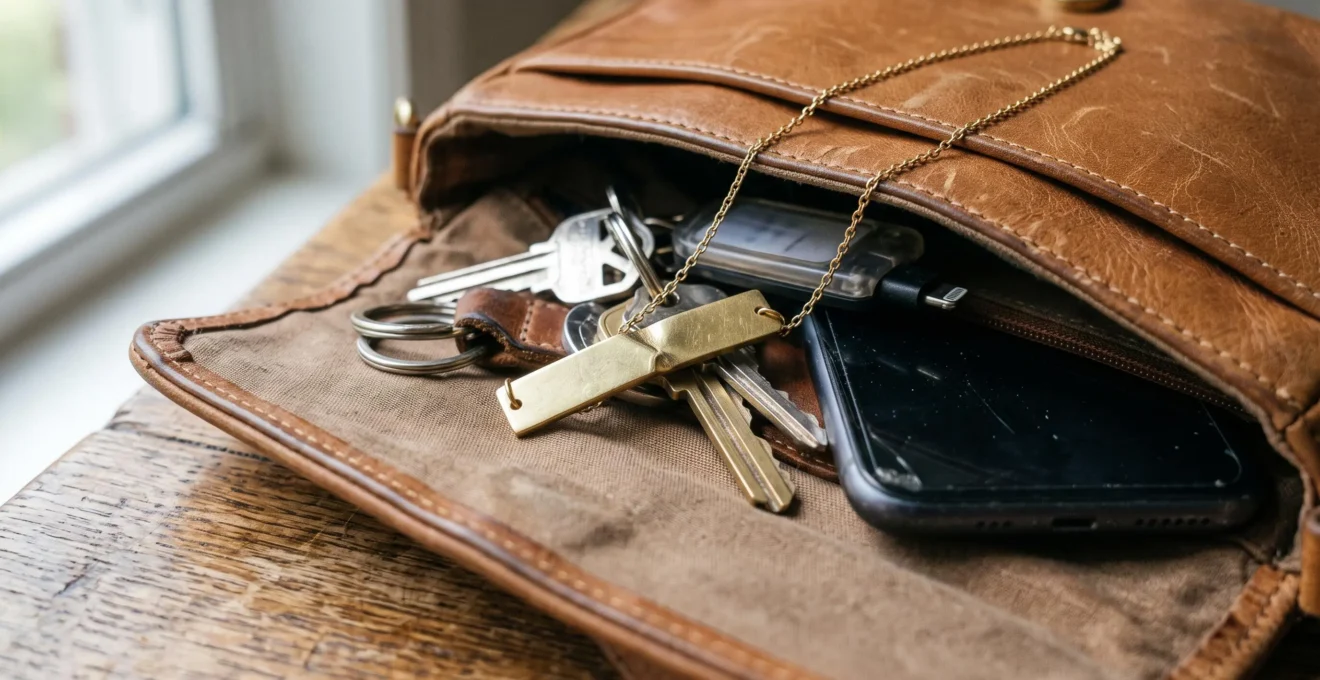
Linear jewellery offers a distinctive minimalist look, but its clean geometry can make deformation especially noticeable. A straight necklace bar, a narrow cuff, an open-frame ring or a delicate filigree design may look substantial in a product photograph while containing very little metal where mechanical strength matters most. When such a piece is compressed between a phone, keys and the side of a handbag, a small force can produce a permanent change in shape.
The underlying issue is not simply that the jewellery is delicate or made from an expensive metal. Its resistance to bending depends on the material, the cross-sectional geometry, the unsupported length and the way a force reaches the piece. Hollow construction, thin profiles and vulnerable connections can all influence the result.
Preventing damage therefore starts before purchase. Understanding how the piece is constructed helps identify which designs can tolerate everyday handling and which need protected storage. If a piece has already bent, the distinction between temporary flexing and permanent deformation determines whether it can safely remain in use or needs professional attention.
What matters most when choosing linear jewellery
- Long, slender profiles generally flex more readily than appropriately designed, thicker sections, all else being equal.
- Hollow construction can reduce weight, but thin walls may dent or collapse under concentrated pressure.
- Separate storage, careful handling and early professional assessment help prevent a small deformation from becoming a crack or broken connection.
- Why Does a Small Knock Permanently Warp a Linear Necklace Bar?
- How to Choose a Linear Jewellery Piece That Won’t Warp After 30 Commutes?
- Hollow or Solid Linear Designs: Which Should You Choose if You Want Lightweight Comfort?
- The Storage Mistake That Slowly Warps Linear Jewellery Even When You Never Wear It
- When Should You Get a Warped Linear Piece Re-Straightened Before It Cracks?
- Why Does Higher Gold Purity Increase Denting After Just 2 Weeks of Wear?
- Why Can Filigree Deform From Light Pressure in a Pocket or Handbag?
- Why Does Filigree Jewellery Snag and Bend More Than You Expect Even When It’s “Fine Gold”?
Why Does a Small Knock Permanently Warp a Linear Necklace Bar?
A small knock can permanently warp a linear necklace bar when the resulting bending stress exceeds the metal’s elastic limit. The bar then retains some or all of its changed shape after the force disappears. The likelihood depends on the bar’s material, cross-section, unsupported length and the location and direction of the impact—not simply on how hard the object was struck.
Metal deformation has two important stages. Elastic deformation is temporary: the component flexes under a load and returns towards its original shape when released. Plastic deformation is permanent: the metal has yielded locally, leaving a bend, kink or offset. A slender pendant may cross that threshold under pressure that feels insignificant to the person carrying it.
Geometry explains much of the difference. A long bar with a small cross-section generally has less bending stiffness than a shorter or more substantial bar made from the same material. A hollow profile may also be vulnerable if its walls are too thin to resist local crushing. The engineering relationship between material stiffness, cross-sectional geometry and unsupported length is explained in Engineering Statics’ explanation of cross-sectional stiffness. Its beam equations provide a useful mechanical framework, although they are not tests of jewellery products.
A permanent kink can also become a practical weak point. Subsequent handling may concentrate bending near the existing deformation, especially if the geometry has changed or the component is repeatedly pressed in the same place. That does not mean every previously bent bar must bend again at precisely the same location, but repeated local deformation can increase the risk of further damage.
The ends and attachment points deserve separate attention. A chain connection, soldered joint or transition between a bar and its end fitting may respond differently from the centre because its geometry and manufacturing history differ. Neither a joint nor the adjacent metal is universally harder or more brittle; the actual construction matters.
For a piece that has just been knocked, inspect it under good light rather than bending it back immediately. Look for a sharp angle, a new gap, a loose attachment or a change in how the pendant hangs. A visible kink indicates that the issue may be more than a superficial scratch.
The practical lesson is that a clean, straight silhouette is not evidence of structural rigidity. The next step is to evaluate the dimensions and attachment design that determine how the jewellery will behave during repeated daily journeys.
How to Choose a Linear Jewellery Piece That Won’t Warp After 30 Commutes?
To choose a linear jewellery piece that is more likely to retain its shape through repeated commutes, examine its cross-section, unsupported length, material and attachment design before judging its appearance. A robust design balances stiffness with comfort and weight. No universal thickness or number of journeys guarantees that a bar necklace, cuff or ring will remain perfectly straight under every load.
The first useful comparison is the relationship between length and section size. A long, narrow bar is generally more flexible than a shorter, thicker bar of the same material under comparable loading conditions. However, two pendants with similar external dimensions can behave differently if one has a thin hollow wall and the other has a more substantial section. Ask for actual measurements rather than relying on the visual impression of thickness.
Attachment design changes the way forces travel through a piece. A pendant that pivots on a central chain loop can rotate as the chain moves, whereas a bar attached at both ends may experience a different combination of twisting and bending. Neither configuration is automatically stronger: the connection, freedom of movement and likely direction of compression determine how it performs in practice.
At a jewellery counter, inspect the bar from the front and side. Check whether the profile appears uniform, whether the ends are securely finished and whether the piece sits straight when suspended. If a seller permits a simple handling check, use only light, non-deforming contact; deliberately bending a display piece is not a reliable or safe durability test. A useful response from the seller includes construction details, not just reassurance that the jewellery is high quality.
Online, product photography can conceal the details that matter most. A front-facing image may not reveal wall thickness, a hollow interior, the size of an attachment loop or the method used to join the components. Request dimensions, a side-profile image, information about solid or hollow construction, and clarification about the intended use. If the manufacturer cannot provide these details, treat durability as uncertain rather than assuming the piece is sturdy.
A five-point jewellery buying checklist
- Record the dimensions. Save the bar’s length, width and stated thickness from the product specification or seller’s reply.
- Confirm the construction. Obtain written confirmation of whether the component is solid, hollow or semi-hollow.
- Check the attachment. Save a close-up image or description of the chain loop, end fittings and visible joints.
- Assess the intended use. Compare the seller’s care advice with your routine, including commuting, bags, pockets and frequent handling.
- Keep the evidence. Save the product description, photographs and answers about materials and construction so that you can compare alternatives on the same criteria.
For frequent commuters, the most sensible choice is a piece whose construction is documented and whose shape can be protected when not worn. Once its structural requirements are clear, the next decision is whether a hollow or solid design provides the better balance of comfort and resistance to damage.
Hollow or Solid Linear Designs: Which Should You Choose if You Want Lightweight Comfort?
A solid linear design is often a sensible starting point when resistance to concentrated pressure matters more than minimum weight, while a hollow design can offer a larger visual profile with less metal. However, solid construction is not an automatic guarantee of strength, and hollow construction is not automatically fragile. Wall thickness, cross-sectional shape, material, length and attachment details determine the performance of the finished piece.
Hollow bars and tubes can be efficient because material placed away from the centre of a cross-section can contribute substantially to bending stiffness without filling the entire interior. That advantage depends on the geometry remaining intact. If a thin-walled tube is compressed at a small contact point, the wall may dent, buckle or collapse locally instead of behaving like a solid bar.
Once a hollow component has a deep dent, restoring its original profile can be difficult. The appropriate repair depends on the metal, the wall thickness, the shape of the damage and the surrounding construction. Attempts to force the wall back into place can create new creases or cracks, so a badly crushed hollow pendant should be assessed before anyone tries to reshape it.
A solid bar avoids the specific failure mode of a thin hollow wall collapsing, but its bending resistance still depends on its cross-section and length. A very thin solid wire can bend readily, and a long solid bar can remain flexible despite containing more metal than a hollow alternative. Comparing equal external dimensions is therefore not enough unless the actual construction and loading are also considered.
| Criterion | Hollow design | Solid design |
|---|---|---|
| Weight | Usually lighter for a comparable external volume | Usually heavier for comparable external dimensions |
| Local compression | Thin walls may dent or collapse | No hollow wall to collapse, although bending and denting remain possible |
| Visual scale | Can provide a larger profile with less material | A similar-sized profile may require more material |
| Repair considerations | Crushed walls may be difficult to restore | Repair depends on the deformation, alloy and component geometry |
| Best decision criterion | Wall thickness and construction quality | Section dimensions and overall stiffness |
For daily use in a bag or pocket, a solid or substantial semi-hollow component may be preferable when comparable designs are available and the extra weight is acceptable. For occasional wear and careful storage, a well-made hollow design can be a reasonable choice. In either case, ask about the cross-section and avoid assuming that weight alone predicts durability.
Construction is only part of the equation: even a well-designed piece can be damaged if it is stored under compression. The way it is packed between commutes can matter as much as the way it is made.
The Storage Mistake That Slowly Warps Linear Jewellery Even When You Never Wear It
Linear jewellery can be damaged in storage when it is repeatedly compressed, trapped beneath heavier objects or forced into a shape it was not designed to hold. A single period of gentle contact does not automatically cause permanent deformation, but a vulnerable component can yield if the applied load is sufficient. Repeated movement inside a bag can add further opportunities for bending and snagging.
The common mistake is treating a jewellery pouch as complete protection. A soft pouch may reduce scratches caused by contact between pieces, but it cannot necessarily prevent a thin bar or cuff from being crushed by a phone, keys or a heavier accessory. If the pouch itself is compressed inside an overfilled bag, its contents may still be exposed to concentrated forces.
The Gemological Institute of America’s jewellery care and storage recommendations advise protecting pieces against incidental damage and separating jewellery during travel. For linear designs, that guidance supports a practical additional precaution: choose a container that prevents the piece from being compressed, bent or trapped beneath other items.
Storage should preserve the natural geometry of the piece. Lay straight bars, rigid bracelets and linear pendants flat in appropriately sized compartments, or use a suitable hanging support when the design allows it. Keep them away from heavier jewellery and avoid winding rigid components tightly around themselves. A container that forces a bar into a curve is the wrong size or shape for that piece.
For travel, use a compartment or case that keeps each piece in its intended position. Place hard objects elsewhere in the bag, and avoid putting the jewellery case beneath heavy items. If the design includes a long chain, secure it in a way that prevents tangling without pulling the bar or pendant into an unnatural curve.
It is also important to distinguish sustained compression from gradual material creep. Some materials can deform under prolonged loads, but the available care guidance does not establish a universal rate of deformation for jewellery resting at room temperature. In everyday storage, direct pressure, impacts and repeated movement are more useful risks to manage than assuming that every linear piece will slowly bend under its own weight.
A quick inspection after travel can reveal a developing problem before it becomes more serious. If a bar has acquired a sharp kink or a cuff no longer sits correctly, resist the temptation to bend it back repeatedly and assess whether professional repair is appropriate.
When Should You Get a Warped Linear Piece Re-Straightened Before It Cracks?
Seek professional assessment when a linear jewellery piece has a sharp kink, a deep dent, a visible crack, a loose connection or a deformation near a soldered joint. Professional attention is also sensible when a piece no longer hangs or fits correctly, catches on clothing, or has already been bent back more than once. These signs do not prove that a crack is present, but they make repeated home straightening a poor gamble.
Each bending and straightening cycle can change the metal’s condition. In many metals, plastic deformation increases local hardness through work hardening and reduces the material’s remaining ability to deform without cracking. The extent of this effect depends on the alloy, the amount of deformation and the manufacturing history. It is not possible to establish a universal safe number of straightening attempts for all jewellery.
Technical jewellery-manufacturing guidance in Ganoksin’s article on cracking in jewellery manufacturing explains how repeated working can reduce ductility and contribute to cracking. It also discusses annealing, a heat treatment that can restore ductility in appropriate circumstances. Whether annealing is suitable for a finished item depends on its alloy, construction, soldered connections, gemstones and other materials.
A jeweller can examine the deformation, identify whether a joint has moved and determine whether the component can be reshaped safely. Depending on the piece, the repair may involve controlled straightening, an appropriate heat treatment, refinishing or replacement of a damaged component. Not every repair requires annealing, and heat should not be applied without considering the entire assembly.
Home attempts with pliers are particularly risky because they can create concentrated pressure marks, flatten a profile or produce another bend beside the first. Repeatedly working a kink in alternating directions may increase the chance of cracking. If the item is valuable or structurally delicate, keep it out of use until it has been assessed rather than trying to restore its appearance by force.
There is no single visual threshold that determines when every bent piece will crack. A smooth, shallow curve in a flexible component may be less concerning than a sharp crease in a thin tube, while a small deformation near a joint may deserve particular attention. The material and geometry must be considered together.
Once the immediate damage has been addressed, material selection becomes another part of the prevention strategy. Gold purity affects hardness and resistance to denting, but it should be evaluated alongside the dimensions and construction of the finished piece.
Key takeaways before assessing fine-gold filigree
- Examine the actual cross-section and connections rather than relying on the apparent thickness of a design.
- Protect vulnerable components from concentrated pressure, and stop using pieces with sharp kinks, cracks or loose joints until they have been assessed.
- Consider the interaction between alloy, construction and handling: material purity alone cannot predict how a delicate shape will perform.
Why Does Higher Gold Purity Increase Denting After Just 2 Weeks of Wear?
Higher gold purity can increase susceptibility to denting because pure gold is relatively soft compared with many gold alloys used in jewellery. Alloying gold with other metals can increase its mechanical strength, although the exact properties depend on the composition and processing. A fine-gold piece may therefore show dents or deformation more readily under everyday pressure, but two weeks is not a universal damage deadline.
The Gemological Institute of America’s comparison of jewellery metals for everyday wear explains that 24-karat gold is particularly soft and susceptible to scratches and dents, while 14-karat and 18-karat gold are options to consider for everyday jewellery. The article focuses on ring materials rather than controlled deformation tests of linear necklaces, so its guidance should inform material selection without being treated as a precise prediction for a pendant or cuff.
Small marks can appear early in the life of a piece if it repeatedly contacts hard surfaces or is exposed to pressure. Their timing depends on how the jewellery is worn, its finish, its alloy and the forces it encounters. Surface scratching and structural bending are also different forms of damage: a fine scratch does not automatically indicate that a component will become curved.
Linear designs deserve particular care because their proportions can make relatively small changes in shape visually obvious. A slender bar has limited section dimensions, so a concentrated force may bend the component even when the visible surface remains largely intact. The risk depends on its cross-section and material rather than on gold purity alone.
For jewellery likely to be exposed to bags, pockets and frequent handling, compare the available karat options alongside construction quality. A lower-karat alloy may offer a useful balance of durability and appearance, but it is not automatically stronger in every finished design. Alloy formulation, work hardening, dimensions and manufacturing quality all influence the result.
Higher purity may be the right choice when material composition is a priority, provided the design and handling suit its mechanical limitations. Buyers should make that trade-off deliberately rather than treating the highest karat as an automatic indicator of everyday robustness.
Even a suitable gold alloy cannot compensate for every vulnerable geometry. The next consideration is filigree, where thin decorative wires and their connections introduce additional opportunities for deformation and snagging.
Why Can Filigree Deform From Light Pressure in a Pocket or Handbag?
Filigree can deform under light pressure because it often consists of fine metal wires arranged into an open decorative pattern and joined to one another or to a supporting frame. A force that affects only one wire can alter the pattern without visibly damaging the entire piece. The actual resistance depends on wire dimensions, alloy, joint quality, support geometry and the direction of the load.
The delicate wires and the supporting frame play different structural roles. Thin decorative elements may flex or shift independently, while a stronger frame can maintain its overall shape. However, a bent frame can misalign several attached wires at once, making the whole motif appear distorted. A piece that looks intricate and dense from the front may still have vulnerable individual elements when viewed from the side.
The connections matter as much as the wires themselves. Fine soldered joints or other small attachment points can be vulnerable to repeated flexing, although the strength of a joint depends on its design and manufacture. If a wire becomes detached, its free end may catch on fabric, hair or neighbouring jewellery. Continued use can then worsen the damage or pull the wire further away from the frame.
When comparing filigree pieces, inspect the pattern under good light and, where possible, with magnification. Look for wires that sit out of alignment, unsupported ends, gaps at connections and uneven spacing that may indicate damage or inconsistent construction. Ask how the wires are secured and whether the design is intended for regular daily wear.
A dense pattern is not necessarily stronger than an open one, and the number of visible joints alone does not establish quality. What matters is how the individual elements are anchored and how the frame supports the pattern. A close inspection of those details is more useful than judging robustness by ornamentation alone.
For storage, keep filigree away from keys, metal clasps and other jewellery that could press against the openwork. Avoid placing it loose in a pocket, where movement and contact can distort an individual wire even if the main frame remains intact.
Once the structure is understood, the next concern is how even a minor deformation can turn into a snagging problem. This is especially relevant when fine gold and openwork construction are combined.
Why Does Filigree Jewellery Snag and Bend More Than You Expect Even When It’s “Fine Gold”?
Filigree jewellery can snag and bend more readily than expected because its fine wires and open spaces create small features that can catch on fabric, hair and other accessories. High-purity gold can add to the vulnerability because it is relatively soft, but the outcome depends on the alloy, wire dimensions, joint construction and condition of the piece. The label “fine gold” describes purity, not a guarantee of mechanical durability.
A wire that is already slightly displaced can form a small projecting edge. When that edge catches on a knitted garment, a scarf or a strand of hair, pulling the jewellery free may apply a bending force to the wire or its attachment. Repeated snagging can gradually worsen the original displacement. A detached wire can also become a new snag point, increasing the risk of further damage.
This creates a practical reason to inspect filigree before putting it away. Under good lighting, look for projecting wire ends, uneven motifs, loose connections and changes in the frame. A soft cotton thread or a fine nylon stocking can sometimes reveal an exposed edge if it catches during a very gentle pass over the surface. This is only a screening method, not a definitive test: do not pull the material across the jewellery or force it through delicate openings, and stop immediately if it catches.
For daily wear, consider the fabrics and activities the jewellery will encounter. Openwork designs may be less suitable beneath chunky knits, loosely woven clothing or scarves that can catch their wires. Remove the piece before placing it in a pocket or an unprotected bag, and store it separately in a compartment that prevents compression.
Careful handling is particularly important for high-purity gold filigree because its fine elements can be difficult to restore without affecting adjacent wires or joints. If an element is already projecting, do not pull it into position with fingers or household pliers. A jeweller can assess whether the wire can be secured or reshaped without introducing additional stress.
When comparing pieces, ask about the alloy, wire thickness, supporting frame and construction of the joints. A well-made design can still require careful handling, and no material specification eliminates the risk of snagging when delicate openwork meets a suitable catching point.
The most reliable way to preserve a clean linear silhouette is to combine a suitable construction with realistic handling habits. Choose dimensions and materials that fit your intended use, store delicate pieces separately, and seek professional assessment when a bend, crack or snagging point appears. That approach protects both the appearance and the structural integrity of minimalist jewellery without assuming that any particular metal or design is damage-proof.
Can a bent bar necklace be straightened at home?
A very slight deformation may appear easy to correct, but straightening can introduce additional stress, marks or cracks. Hollow bars, thin solid components and pieces with soldered connections require particular care. If the bar has a sharp kink, a deep dent, a loose joint or a visible crack, stop wearing it and seek a jeweller’s assessment rather than repeatedly bending it back.
Is solid gold jewellery always stronger than hollow gold jewellery?
No. A solid component avoids the risk of a thin hollow wall collapsing, but its bending resistance still depends on its dimensions, length, alloy and construction. A well-designed hollow section can provide useful stiffness at lower weight, while a thin solid wire may remain flexible. Compare actual cross-sections and construction details instead of relying on the solid or hollow label alone.
Does 24-karat gold bend more easily than 14-karat gold?
Pure 24-karat gold is generally softer than commonly used 14-karat gold alloys and is more susceptible to scratches and dents. However, the bending resistance of a finished piece also depends on its dimensions, alloy composition and manufacturing. Karat is an important material consideration, not a complete measure of structural strength.
What is the safest way to pack a bar necklace for travel?
Place the necklace in a separate, appropriately sized jewellery case or padded compartment that prevents compression. Keep it away from keys, phones and heavier accessories, and avoid tightly coiling a rigid bar or forcing it into a small pouch. Soft padding can reduce scratches, but the case must also protect the piece from crushing.
How can you tell whether filigree jewellery is starting to become damaged?
Inspect the piece under good lighting for projecting wires, asymmetrical patterns, loose connections, sharp edges and visible changes to the supporting frame. A very gentle pass with cotton thread or fine nylon may reveal a snag point, but stop if the material catches. Do not pull on a wire or try to bend it back into place; have a jeweller assess any suspected structural damage.