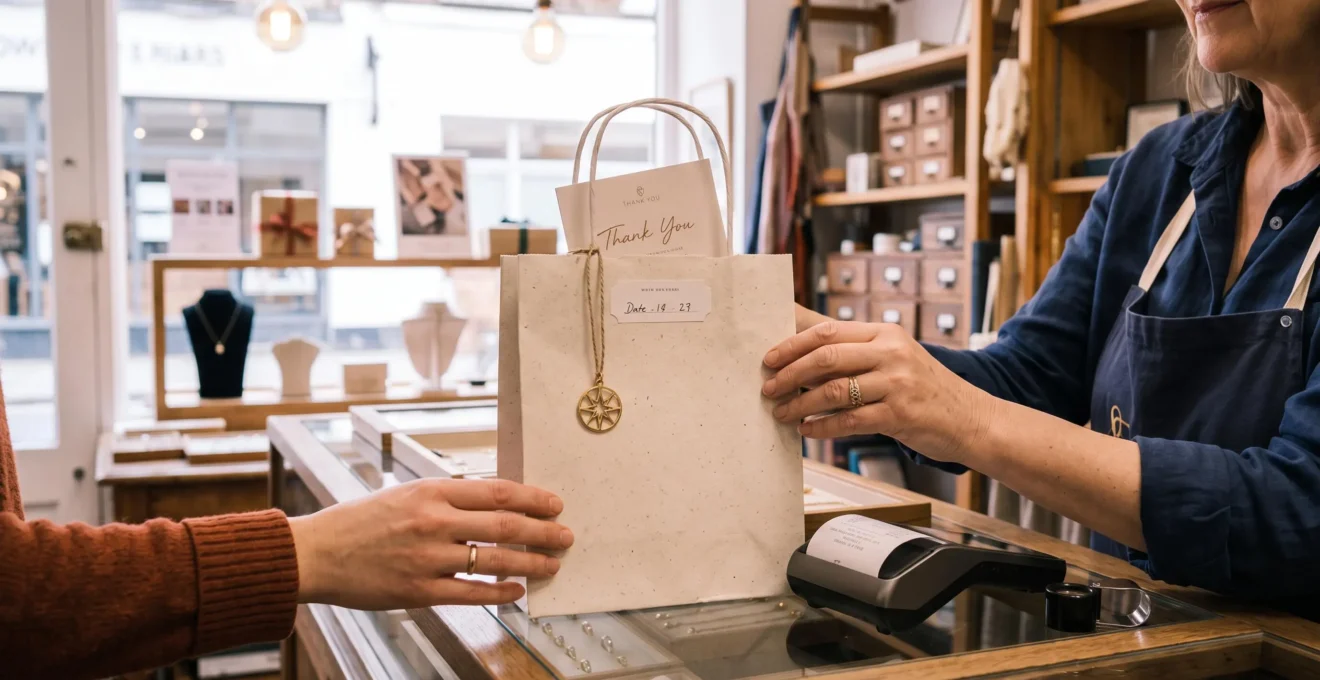
A cultural-identity jewellery gift can express belonging, family history and affection, but its meaning depends on more than an attractive design. A pendant associated with protection, a ring connected to Irish heritage or a motif inherited through generations may represent something deeply personal to its wearer. Choosing one responsibly means understanding whose tradition it reflects, what the symbol communicates and whether the recipient actually identifies with it.
This distinction matters particularly in English-speaking multicultural societies and diaspora communities. Someone whose grandparents migrated may treasure a traditional piece, prefer contemporary interpretations or feel little connection to the symbols outsiders associate with their ancestry. None of those responses can be predicted from ethnicity or a surname alone.
The safest approach is to verify the meaning, consider the maker’s relationship to the tradition and match the gift to the recipient’s own preferences. Cultural authenticity is important, but so are consent, context, craftsmanship and everyday wearability.
Choosing cultural-identity jewellery respectfully
- Confirm what a symbol means within the relevant community before assuming it represents the recipient.
- Evaluate provenance, maker credibility and cultural context rather than relying on a product’s heritage-inspired marketing.
- Choose a design the recipient would genuinely wear, with appropriate symbolism, styling and practical durability.
- Why Can a « Pretty Motif » Carry Serious Cultural Meaning to the Wearer?
- How to Verify the Meaning of a Cultural Jewellery Symbol in 30 Minutes Before You Buy?
- Heritage Maker or Mainstream Brand: Which Should You Choose for Identity Jewellery?
- The Styling Mistake That Turns Cultural Jewellery Into Costume Without You Noticing
- When Is It Appropriate to Wear Cultural-Identity Jewellery at Work or Formal Events?
- Heritage Maker or Mainstream Brand: Which Should You Choose for Identity Jewellery?
- Geometric or Natural: Which Should You Choose for a « Signature » Piece You’ll Wear for 10+ Years?
- Which Design Direction Fits You Better: Geometric Precision or Natural Motifs for Daily Wear?
Why Can a « Pretty Motif » Carry Serious Cultural Meaning to the Wearer?
A jewellery motif can carry serious cultural meaning because its significance comes from the people, beliefs and traditions associated with it, not simply its appearance. The same pendant may look decorative to one buyer but represent protection, faith or family belonging to its wearer. A gift becomes sensitive when it assigns a cultural identity the recipient does not recognise.
Consider the hamsa, commonly depicted as a hand-shaped amulet. In the British Museum collection record of a hand-shaped amulet, a gilded copper pendant made in Gaza during the early twentieth century is identified as protection against the evil eye. The museum notes that comparable examples may have been used by Muslim or Jewish communities.
This illustrates an important principle: a symbol can be shared across traditions without having one identical meaning for everyone. A hand-shaped pendant should not automatically be described as exclusively belonging to one religion, nor should its broad circulation be taken as permission to disregard its context.
Other familiar motifs require similarly careful interpretation. Celtic knotwork may communicate heritage or continuity in a contemporary design, while a Claddagh ring can carry personal associations with Irish identity and relationships. Evil-eye jewellery may express a protective belief, family custom or simply an aesthetic preference, depending on the wearer.
The distinction between open and restricted symbolism is useful, but it is not a universal classification. Some designs circulate widely; others are connected to particular ceremonial roles, community knowledge or religious practices. A buyer should ask about the specific design rather than categorising an entire culture’s jewellery as freely available or forbidden.
Gifting adds another layer of responsibility. A person with mixed heritage may identify strongly with one family tradition, several traditions or none. Giving them a pendant labelled with an assumed ancestral identity can feel less like recognition and more like being misunderstood.
Celebrity endorsements and mainstream jewellery collections cannot settle that question. Commercial popularity tells buyers that a design is fashionable, not that its meaning has become culturally neutral.
Before choosing a symbol, establish what it means to the intended wearer. That personal relationship matters more than the interpretation printed on a jewellery tag.
How to Verify the Meaning of a Cultural Jewellery Symbol in 30 Minutes Before You Buy?
You can make a meaningful first assessment of a cultural jewellery symbol in 30 minutes by identifying its recognised name, checking at least two independent sources and questioning the seller about its origin and intended use. This is a practical screening method, not a guarantee of cultural accuracy. Conflicting explanations are a reason to investigate further.
Begin by separating the physical design from its marketing description. A product called an ancient protection necklace may contain several motifs, and the seller may not explain which element carries which meaning. Record the symbol’s name, any known term in its original language and the community or region the description associates with it.
Then consult sources independent of the retailer. Museum collections can help establish historical use; community publications and knowledgeable artisans can explain meanings within living traditions. These sources serve different purposes, so agreement on a historical origin does not automatically establish modern gifting etiquette.
A useful reliability test is whether the explanation identifies a particular tradition, context and limitation. Be cautious when numerous shops repeat identical sentences about universal luck, protection or spiritual power without identifying who uses the symbol or how its interpretation was established.
Contacting the maker is particularly valuable when a piece combines traditions. A necklace may feature a recognisable religious motif alongside geometric ornamentation borrowed from another artistic heritage. Verifying only the central symbol leaves the composite design unexplained.
Ask who traditionally wears the design, whether specific versions are associated with ceremonies or relationships, and whether the maker has adapted historical elements. A credible response should distinguish documented information from contemporary interpretation.
Verification also concerns material and origin claims. For American Indian jewellery sold in the United States, the FTC advice on buying American Indian arts and crafts recommends obtaining written evidence of important authenticity claims. The applicable rules concern representations about qualifying products and makers; they are not a universal certification system for cultural symbolism.
A five-step cultural symbol verification checklist
- Identify the motif. Write down its recognised name, the original-language term where available and the claimed cultural origin. Deliverable: a short identification note.
- Find two independent explanations. Compare a reputable institutional or historical source with a relevant community or artisan perspective. Deliverable: two source references with their main claims.
- Record uncertainty. Note meanings that differ by community, historical period or religious interpretation. Deliverable: a brief list of unresolved questions.
- Question the maker or retailer. Ask about provenance, traditional use, alterations and any relevant restrictions. Deliverable: a written seller response or documented unanswered enquiry.
- Check recipient suitability. Confirm that the motif fits what the recipient has expressed about their identity, beliefs and jewellery preferences. Deliverable: a clear buy, reconsider or do-not-buy decision.
The suggested half-hour is enough to uncover obvious errors, not to resolve every disputed interpretation. If reliable explanations conflict or the maker cannot explain the design, select a less symbolically demanding alternative.
Once the meaning is sufficiently clear, the next decision concerns who should make the jewellery and how confidently they can substantiate its origin.
Heritage Maker or Mainstream Brand: Which Should You Choose for Identity Jewellery?
Choose a heritage maker when documented cultural provenance, traditional craft knowledge and a connection to the originating community are central to the gift. A mainstream brand can be suitable when the design is culturally appropriate, clearly described and better suited to the recipient’s budget or lifestyle. Neither category guarantees accuracy simply through its label.
The distinction involves more than whether a piece is handmade. A heritage maker may practise skills inherited or learned within a community, while a mainstream retailer may sell widely accessible designs produced through standardised methods. Both can create attractive jewellery, but they offer different kinds of evidence about its significance.
UNESCO‘s overview of traditional craftsmanship explicitly includes jewellery among traditional craft expressions. Its framework emphasises the knowledge and skills involved in making objects, their transmission between generations and the pressures traditional craftspeople may face from mass production.
That heritage dimension can make an artisan’s explanation especially valuable. It does not, however, mean every independent maker belongs to the culture represented or that every major retailer misrepresents traditional designs.
Use the following comparison to decide what matters most for a particular gift.
| Decision criterion | Heritage maker | Mainstream brand |
|---|---|---|
| Meaning and cultural context | May offer direct knowledge of a living tradition, which still needs verification. | May provide simplified descriptions; accuracy depends on research and disclosure. |
| Craftsmanship and provenance | May document techniques, makers and community connections. | Can offer consistent production standards and clear materials information, but not necessarily cultural provenance. |
| Price and accessibility | Cost and availability vary with materials, technique and production scale. | Often offers broader distribution and multiple price ranges. |
| Risk of symbolic inaccuracy | Lower when the maker has relevant knowledge and explains the specific design. | Depends on whether the brand researches the motif and avoids unsupported claims. |
When assessing an artisan, look for information about the person who made the piece, their relationship to the tradition and any collaboration with the community. Being able to explain why an element was used is more persuasive than describing it vaguely as exotic, tribal or ancient.
Budget matters too. If a culturally specific handmade piece is unaffordable, an understated design without restricted or uncertain symbolism may be a more respectful choice than a cheap imitation marketed with exaggerated heritage claims.
A mainstream interpretation can also work when the recipient has expressed a preference for modern design and the original tradition is acknowledged accurately. The important distinction is between honest contemporary adaptation and a product pretending to possess provenance it does not have.
After choosing a maker, consider how the jewellery will be worn. Even a responsibly sourced piece can communicate something unintended when combined with unrelated cultural symbols.
The Styling Mistake That Turns Cultural Jewellery Into Costume Without You Noticing
Cultural jewellery can begin to resemble costume when meaningful symbols from several unrelated traditions are combined primarily for decorative effect, without understanding their individual contexts. The concern is not mixing cultures automatically, but turning objects associated with identity, faith or ceremony into an interchangeable aesthetic. Personal relationships and the wearer’s intentions substantially change how such combinations may be understood.
Imagine, as a hypothetical example, someone wearing a protective amulet, a ceremonial-looking pendant from an unrelated tradition and several heritage-inspired ornaments purchased solely because their shapes match. Each item might have a legitimate context on its own, but the combination could appear to treat distinct traditions as one decorative category.
That interpretation is not inevitable. Multicultural families, diaspora communities and people with several meaningful cultural affiliations may naturally wear jewellery from different backgrounds together. A simple rule against mixing would erase those authentic relationships.
The more useful question is whether the person can explain their connection to the items and whether any design calls for particular care. Relationship and context matter more than the number of cultural influences visible.
An inherited pendant offers a clear example. Someone may wear a grandparent’s amulet because it carries family memories, even if they practise their heritage differently from previous generations. That relationship is fundamentally different from collecting visually similar pieces while disregarding their origins.
For everyday styling, consider making one culturally significant piece the focal point. Neutral chains, simple earrings or minimal rings can complement it without introducing additional symbolism. If a motif has sacred or ceremonial associations, avoid presenting it in an overtly mocking or ironic context.
Professional and public settings can increase the visibility of these choices, but reactions vary widely by community and situation. It would be misleading to assume that cultural jewellery routinely attracts criticism or that every unusual combination constitutes appropriation.
When uncertain about an inherited or gifted piece, learning its story is more constructive than hiding it. When choosing jewellery without a personal connection, taking time to understand the tradition is equally important.
The same principle applies to work and formal occasions, where cultural appropriateness and the expectations of a particular setting must be evaluated independently.
When Is It Appropriate to Wear Cultural-Identity Jewellery at Work or Formal Events?
Cultural-identity jewellery is often appropriate at work and formal events when it respects the relevant tradition, reflects the wearer’s relationship to the piece and suits the occasion’s practical requirements. Cultural appropriateness and dress-code compatibility are separate questions. A personally meaningful item may be culturally appropriate even when its size or construction creates a practical issue.
For ordinary office wear, a discreet family pendant, meaningful ring or religious symbol can fit naturally alongside professional clothing. A person’s own cultural or religious jewellery should not automatically be treated as less professional than conventional accessories.
In the United States, the EEOC guidance on religious discrimination in the workplace recognises that religious dress can include jewellery. Under applicable federal law, sincerely held religious practices may require reasonable accommodation when they conflict with workplace rules, subject to the governing undue-hardship standard.
That legal protection should not be confused with a universal right to wear any accessory in any setting. The rules discussed by the EEOC concern US employment law and religious practices, not every form of cultural or ethnic jewellery across English-speaking countries.
For practical decisions, consider how different occasions affect the choice.
| Setting | What to consider | Practical approach |
|---|---|---|
| Everyday office | Personal meaning, workplace requirements and physical safety. | Wear a meaningful piece naturally; address specific dress-code conflicts where necessary. |
| Client-facing event | Formality, comfort and whether the design requires explanation. | Choose a piece suitable for the event without unnecessarily concealing personal identity. |
| Wedding | Dress expectations, family customs and the couple’s preferences. | Ask before choosing a motif with particular ceremonial associations. |
| Religious or community ceremony | Participant roles, community guidance and potentially restricted symbolism. | As a guest, follow the hosts’ advice instead of assuming a symbol is appropriate. |
The distinction between guest and community member is particularly important. At a wedding or religious celebration, a host may invite guests to wear particular items or colours. Such an invitation provides stronger contextual guidance than independently selecting an unfamiliar ceremonial design.
Likewise, wearing a personal identity piece at work is different from selecting jewellery associated with a colleague’s background as a surprise gift. In the latter case, it is worth establishing whether the colleague welcomes that form of recognition.
There is no universally correct size, metal or visibility level for culturally significant jewellery. Practical fit matters, but cultural sensitivity does not require removing every visible expression of identity.
These considerations also affect purchasing decisions: jewellery that feels comfortable and appropriate across the recipient’s actual routines is more likely to become a valued possession.
Heritage Maker or Mainstream Brand: Which Should You Choose for Identity Jewellery?
For long-term identity jewellery, a heritage maker is worth prioritising when the recipient values cultural continuity, traceable craftsmanship and a story they can pass on. A mainstream brand may be preferable for accessible, contemporary daily wear when its claims are accurate. The better choice depends on personal significance and product quality, not an assumption that one category always retains more value.
Long-term value has several dimensions. Financial resale value depends on factors such as materials, condition and demand, whereas sentimental or heirloom value can come from memories, relationships and documented provenance. A piece may become irreplaceable to its owner without becoming more valuable commercially.
UNESCO’s traditional craftsmanship framework recognises that some crafted objects become heirlooms and that the knowledge involved in making them can be passed between generations. This provides a reason to value provenance and craftsmanship, but it does not demonstrate that every heritage-made item will become an heirloom.
Different buyers should therefore use different priorities:
- Gifting someone else’s heritage: prioritise the recipient’s stated preferences, the maker’s credible connection to the tradition and accurate symbolism.
- Reconnecting with personal roots: explore makers, relatives and community sources that can help explain a specific family’s traditions without presenting one interpretation as universal.
- Choosing a daily signature piece: balance meaningful design with comfort, workmanship, repairability and suitability for regular use.
One difficult category consists of products presented as artisanal or heritage-made without substantive supporting information. Marketing may imitate workshop imagery, hand-finished textures or traditional patterns while offering little evidence of who created the jewellery.
Three indicators can help distinguish credible provenance from an unsupported aesthetic claim. First, identify whether an individual maker, workshop or responsible organisation is named. Second, check whether the product describes materials and techniques with meaningful specificity. Third, look for a clear account of the design’s relationship to the relevant cultural community.
For American Indian-made jewellery marketed in the United States, the FTC‘s consumer guidance offers additional reasons to examine origin claims and documentation. Its particular legal requirements should not be assumed to apply to other traditions or countries.
Buying from an accountable heritage maker may also support craft livelihoods and transmission of specialist skills. However, that benefit should not be presumed without understanding who receives the proceeds and how the work is organised.
If a family story is central to the gift, request written provenance information where possible. A brief, accurate account of the maker, design and circumstances of purchase may remain useful long after fashion preferences change.
Once cultural meaning and maker credibility are established, the remaining design decision concerns how the piece will age aesthetically and emotionally.
Geometric or Natural: Which Should You Choose for a « Signature » Piece You’ll Wear for 10+ Years?
For a jewellery piece intended to remain meaningful for ten years or longer, choose geometric or natural motifs according to their specific symbolism, versatility and personal relevance. Abstract geometry can be visually understated, while flowers, animals and celestial forms may feel more expressive. Neither category is automatically culturally neutral or inherently more timeless.
A clean geometric pendant can be appealing because its proportions, surface texture and finish create visual interest without needing an explicit pictorial subject. That makes some abstract designs easy to combine with different wardrobes and existing jewellery.
However, geometric does not necessarily mean culturally unrestricted. Particular patterns, arrangements and forms can carry highly specific meanings within religious, artistic or community traditions. Their apparent simplicity does not remove the need for verification.
Natural motifs present a different set of choices. Flowers, leaves, birds and celestial shapes may connect to personal memories or cultural stories. A particular flower might remind someone of a family garden; another design could refer to a historical or religious tradition. Neither interpretation should be assumed without context.
For longevity, separate meaning from fashion. A pendant that depends entirely on a momentary styling trend may become less appealing when the wearer’s preferences change. By contrast, an understated design can remain emotionally relevant when it reflects something enduring about the recipient’s life.
Use a simple ten-year test:
- Would the recipient still recognise the motif’s meaning as personally relevant if its current popularity disappeared?
- Can the jewellery be worn with different clothing styles and across ordinary life changes?
- Is the construction suitable for maintenance or repair if needed?
- Could the wearer comfortably explain the design’s significance without relying on an inaccurate cultural story?
A natural motif can pass this test just as successfully as a geometric one. An inherited floral design may have stronger staying power for its wearer than a minimalist geometric piece selected only because it currently looks fashionable.
Physical longevity also depends on construction, material suitability, care and frequency of wear. The visual style alone cannot establish how well a piece will survive a decade of use.
For a gift, that long-term perspective is useful only when matched to how the recipient dresses and the degree of attention they want their jewellery to attract.
Key takeaways before choosing the final design
- A lasting signature piece should reflect the recipient’s own sense of identity rather than a cultural story assigned by the buyer.
- Visual simplicity does not guarantee symbolic neutrality; verify the actual pattern, whether geometric or natural.
- Everyday comfort, preferred visibility and compatibility with existing jewellery can matter as much as the motif itself.
Which Design Direction Fits You Better: Geometric Precision or Natural Motifs for Daily Wear?
Geometric jewellery often suits people who prefer clean lines, structured outfits and discreet accessories, while natural motifs may appeal to those who enjoy expressive shapes and personal storytelling. The best daily-wear choice depends on the individual’s wardrobe, comfort and desired visibility. A hybrid design can offer visual balance without sacrificing meaningful detail.
Start with ordinary clothing rather than special occasions. Someone who usually wears tailored shirts, simple knitwear and understated accessories may appreciate the controlled proportions of a geometric pendant or ring. Another person who favours textured fabrics, flowing silhouettes and distinctive accessories may prefer a botanical or animal-inspired design.
These are styling possibilities, not fixed rules. A sculptural geometric ring can be striking, while a tiny leaf pendant may be almost invisible beneath a shirt collar.
Visibility is therefore a better diagnostic than treating the two styles as opposites. Ask whether the wearer wants jewellery that invites questions or something that feels personal without becoming a conversation starter.
Geometric pieces with simple silhouettes can often be layered with plain chains or compact earrings. Their visual effect comes from proportion, polish and how surfaces catch light. Natural motifs may introduce recognisable imagery and varied contours, which can make them effective focal pieces when the rest of the jewellery is restrained.
A hybrid approach combines elements of both. For example, a flower rendered with simplified angular petals may preserve a personally meaningful reference while fitting a minimalist wardrobe. A circular pendant engraved with a small botanical element could serve a similar purpose.
Such combinations are not automatically culturally neutral. If the specific flower, pattern or arrangement carries traditional significance, its meaning still needs to be checked. Visual abstraction changes appearance, not necessarily cultural context.
For someone buying a surprise gift, the most informative evidence is often already available in the recipient’s jewellery habits. Notice whether they repeatedly choose small symmetrical pieces, large decorative shapes, layered chains or a single necklace worn almost every day.
When those preferences are unclear, an adjustable, understated design with transparent provenance can be a lower-risk gift than an elaborate motif that makes assumptions about faith or ancestry. A flexible exchange arrangement may be equally useful.
Choose the piece only after its meaning, provenance and cultural context are sufficiently clear. Then match its shape, size and material to the recipient’s actual preferences, so the final gift expresses consideration rather than an identity they were never asked to claim.
Can cultural jewellery be a meaningful gift for someone who is not closely connected to their ancestry?
Yes, if the recipient welcomes that connection. Some people enjoy jewellery that helps them explore family heritage, while others prefer not to express ancestry through clothing or accessories. Ask about their interests or consider a gift with a personal family connection instead of choosing symbols solely from assumed ethnic identity.
Does a symbol become culturally neutral when many jewellery brands sell it?
No. Commercial popularity does not necessarily remove a symbol’s religious, historical or community associations. A widely sold design may carry different meanings for different wearers. Its particular origin, use and interpretation should still be checked before choosing it as an identity-related gift.
What should you do if a family member and a jewellery seller give different meanings for the same symbol?
Treat the difference as a reason to investigate, not as proof that either person is automatically wrong. Family practices, regional traditions and commercial interpretations may differ. For a gift intended to honour a particular person’s heritage, the recipient’s family understanding may be especially relevant, provided broader claims about the symbol are not made without evidence.
Is it better to engrave a personal message than to choose an unfamiliar cultural symbol?
A personal engraving can be a thoughtful alternative when symbolic meanings remain uncertain. Initials, a meaningful date or a short message may express the relationship without assigning a cultural identity. If the engraving uses another language or traditional script, verify its spelling and meaning with a knowledgeable speaker before ordering.
Can a cultural jewellery gift be returned or exchanged without appearing disrespectful?
Yes. A recipient may appreciate the intention while preferring a different design, size or symbol. When practical, check the seller’s return and customisation policies before purchase, particularly for engraved or handmade items. Offering flexibility shows that the recipient’s comfort and preferences matter more than preserving the buyer’s original choice.